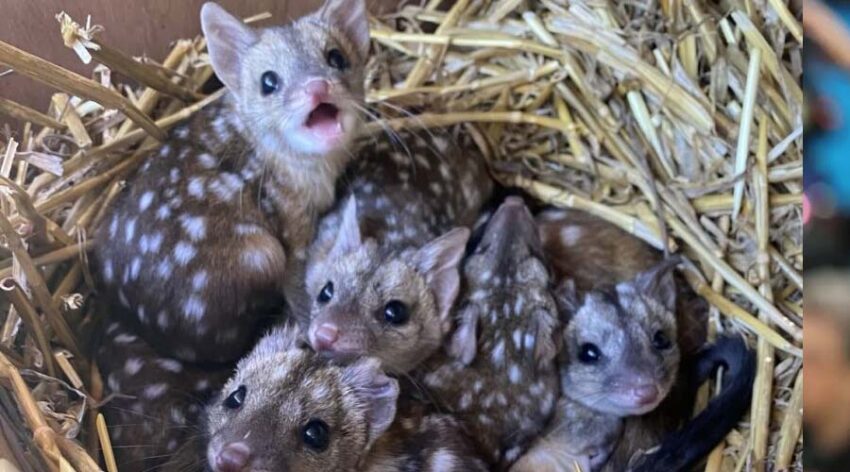
A group of researchers working in the heart of Australia recently stumbled upon an awe-inspiring sight that could signal a turning point for one of the countrys most vulnerable animals. While patrolling the Mt Gibson Wildlife Sanctuary, ecologists made a stunning discovery inside a hidden nest where they found a litter of newborn, spiky creatures. At first glance, the sight was endearing, but the weight of the realization hit the team quickly. These were western quolls, a rare species of carnivorous marsupial that had been pushed to the very brink of extinction.
The history of the western quoll, often referred to as the chuditch, is a troubled one. Before European settlement, these cat-sized marsupials were found scattered across the Australian continent. Over the decades, their population plummeted due to habitat loss and threats from invasive species, leaving them confined to small, isolated clusters in the southwestern corner of the country. As key players in their ecosystem, they fulfill an important role by managing the populations of smaller invertebrates, reptiles, and birds, making their survival vital to the health of the Australian wild.
In an effort to turn the tide, researchers launched an ambitious project to reintroduce these animals to the Mt Gibson Wildlife Sanctuary, a region where they had long been considered extinct. The mission was delicate and required careful monitoring to see if the relocated animals could adapt to their ancestral home. The discovery of the spotted, spiky newborns inside the nest confirms that the project is not just operating, but thriving. It is now clear that the relocated quolls have successfully settled into their new environment and are reproducing, marking a massive victory for conservationists.
Georgina Anderson, a senior field ecologist with the Australian Wildlife Conservancy, expressed the team’s excitement regarding the milestone. She noted that regular monitoring through camera traps has shown the quolls are doing exceptionally well. One particular quoll, affectionately named Aang, has become a favorite among the researchers, known for his large stature and his bold habit of stealing the chicken lure from bait canisters.
Seeing Aang thrive alongside the new generation of pouch young provides a powerful, tangible symbol of hope. This progress at the Mt Gibson Wildlife Sanctuary serves as a reminder that with consistent effort and dedicated protection, it is possible to pull a species back from the edge of disappearance. While there is still much work to be done to ensure these creatures can one day reclaim their place across the wider Australian landscape, this successful breeding is an undeniable and joyous step in the right direction.