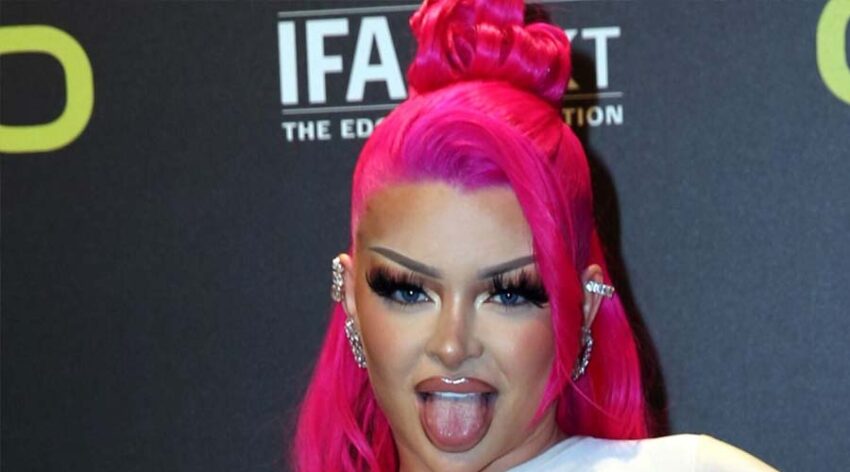
German rapper and internet sensation Katja Krasavice has once again managed to divide the internet, shock critics, and dominate headlines across Germany. But this time, the controversy may be bigger than anything she has done before.
With a provocative new album cover, political symbolism, and bold attacks on German leaders, the 28-year-old artist has turned herself into one of the most discussed celebrities in Europe. Her upcoming album, provocatively titled “Bundeskanzlerin” (“Chancellor”), is already creating outrage months before its release.
The cover image immediately exploded on social media. Katja appears completely naked except for a sash reading “Bundeskanzlerin.” Standing beside her are AI-generated versions of former German Chancellor Olaf Scholz and current political figure Friedrich Merz. The image combines sexuality, politics, feminism, and mockery in one carefully calculated visual statement.
For many people, it was simply another outrageous publicity stunt. For others, it became a symbol of rebellion against traditional politics and conservative public expectations. And that is exactly why Katja Krasavice remains impossible to ignore.
The rapper did not stop with the shocking image itself. In her Instagram caption, she openly attacked Germany’s political elite, writing that “Germany needs a bitch on the throne.” She also mocked Merz and Scholz by joking that she had “made them unemployed” so that Germans could finally become happy, rich, and confident again.
Critics quickly accused her of disrespecting political institutions and turning serious topics into entertainment. Yet her fans defended her fiercely, calling the campaign “fearless,” “funny,” and “iconic.” Social media platforms were flooded with memes, reactions, and debates about whether Katja was expressing feminist empowerment or simply using controversy to sell music.
This is not the first time Katja Krasavice has built her career around provocation. Born in the Czech Republic as Katrin Vogelová, she first gained popularity online through YouTube and social media before transforming herself into one of Germany’s most successful female rappers.
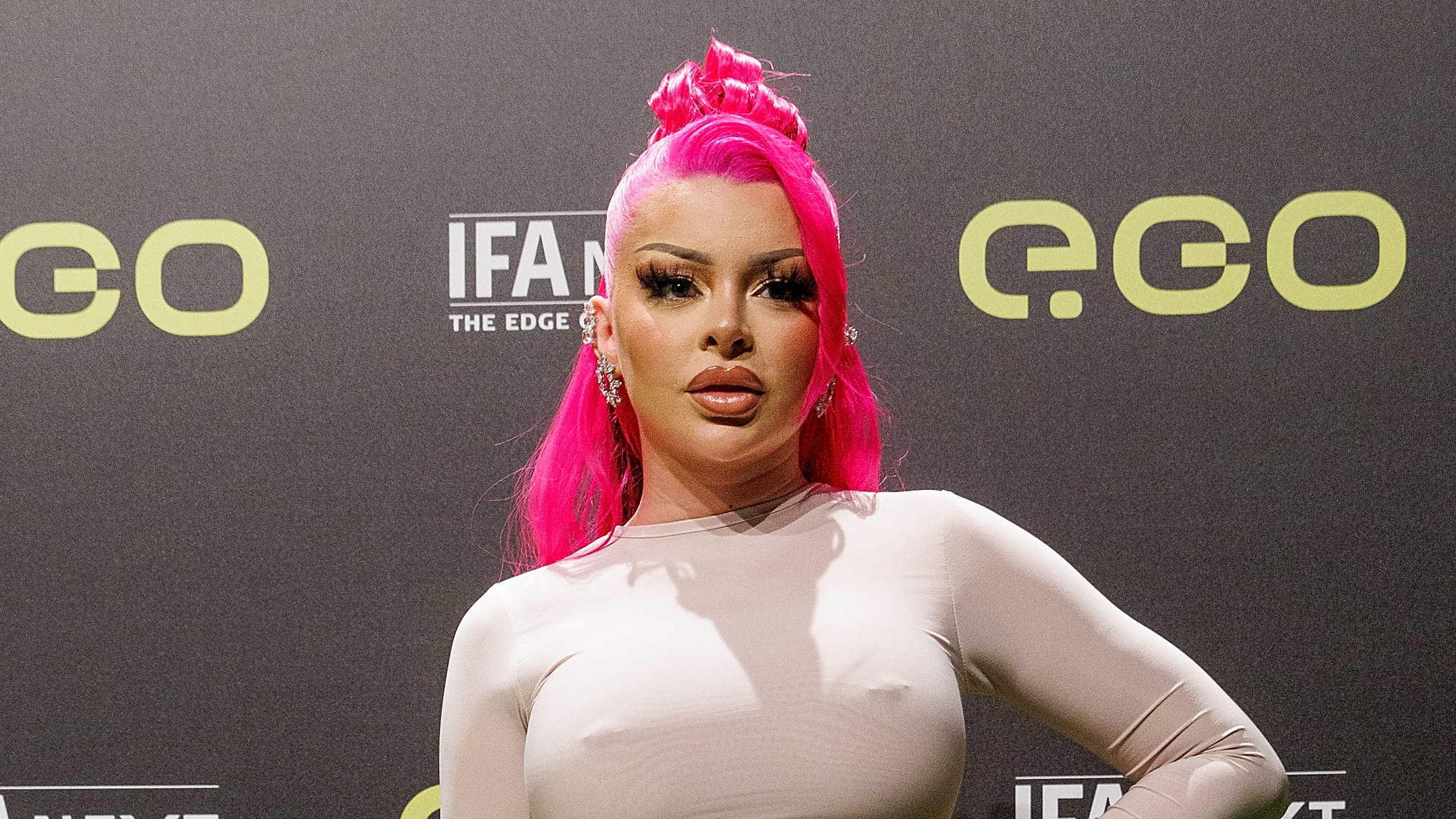
Her music, image, and interviews often revolve around sexuality, body confidence, cosmetic surgery, and female independence. She openly discusses topics many celebrities avoid, including beauty procedures, online adult content, and gender double standards. Because of that, she has become both admired and hated in equal measure.
Over the years, Katja has repeatedly argued that society unfairly judges women who use sexuality openly while celebrating men who profit from the same behavior. In interviews, she has described herself as someone fighting against hypocrisy in entertainment and politics.
The “Bundeskanzlerin” project appears to continue exactly that strategy. The combination of nudity and political imagery was designed to provoke emotional reactions. And it worked perfectly.
German media outlets immediately began covering the story. Some described the campaign as clever social satire, while others dismissed it as empty scandal marketing. Conservative commentators accused her of damaging public discourse, while younger audiences largely celebrated the boldness of the campaign.
Interestingly, even people who dislike Katja often admit that she understands modern media better than many traditional celebrities. Every controversial post becomes viral within hours. Every criticism generates even more publicity. In today’s social-media-driven entertainment industry, outrage itself has become a powerful marketing tool — and Katja Krasavice knows exactly how to use it.
The timing of the album campaign also matters. Germany has recently experienced intense political polarization, growing frustration with leadership, and constant online debates about feminism, identity, and freedom of speech. Katja inserted herself directly into that cultural tension. Instead of avoiding controversy, she transformed it into her personal brand.
Some observers even compare her strategy to international pop stars who combine political symbolism with provocative imagery to remain culturally relevant. But Katja’s style feels uniquely German — mixing internet culture, blunt humor, sexuality, and direct attacks on authority.
Not everyone is amused. Several critics online argued that political offices should not be reduced to memes or sexual performances. Others questioned whether the campaign crosses boundaries of taste and respect.
Still, the backlash may actually help her career even more. History has shown that scandal often increases curiosity. People who never listened to her music are suddenly discussing her album. News websites, influencers, and social media users continue sharing the images and debating the meaning behind them.
Katja herself seems completely comfortable with the chaos. In multiple interviews and posts, she has made it clear that criticism no longer scares her. She presents herself as someone who built success by ignoring public judgment and refusing to follow traditional rules.
Whether people see her as a feminist icon, a marketing genius, or simply a provocateur, one thing is undeniable: she understands how to control attention in the digital age.
And perhaps that is the real reason Germany cannot stop talking about her.
Because in a world where celebrities fight desperately to stay relevant, Katja Krasavice has mastered the art of turning outrage into influence — and scandal into power.