
The suit had taken my mother four months to save for.
She had been pricing it out since February, setting aside small amounts from her grocery budget without telling anyone.
I only found out years later, long after that night had taken on the weight it would carry for the rest of our lives, that she had skipped buying herself a winter coat that year to afford it.
I remember standing at the bottom of the stairs the evening Daniel came down in it.
I watched my mother press her hand over her mouth.
She had that particular look mothers get when they see their child as a young man instead of a boy for the first time.
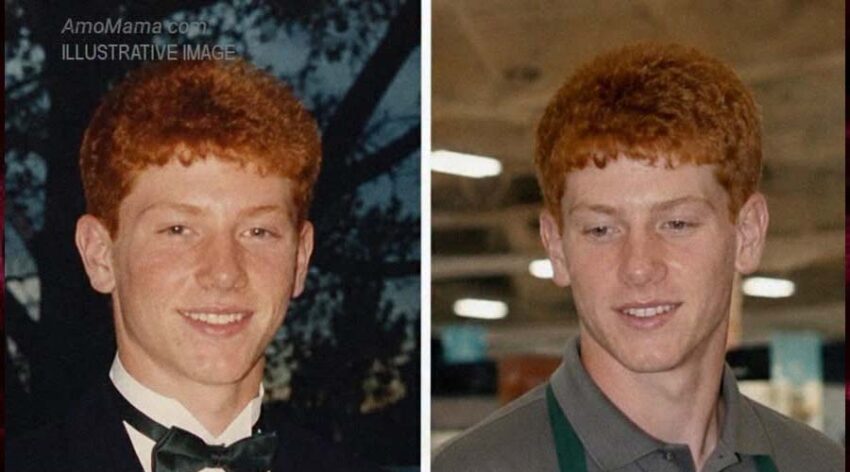
He was 17, tall in the way he had only recently grown into, his hair combed back in a style he’d clearly practiced more than once in the bathroom mirror.
“You look so handsome,” she said.
“Thanks, Mom,” he grinned, adjusting his collar while glancing at his reflection in the hallway mirror.
“Don’t wait up,” he added, the way he always did, a small joke between them that neither of them actually meant.
“I’ll wait up,” she said. “I always wait up.”
He laughed.
He was easy and golden that year in a way I envied at 12, irritated by the way he ruffled my hair on his way past me.
“You’re going to look back on tonight your whole life,” my father said from the kitchen doorway, holding his coffee mug. “Make it count.”
“I will, Dad,” Daniel said. “Home by midnight. Promise.”
He kissed my mother’s cheek and squeezed my shoulder on the way past.
The screen door banged shut behind him the way it always did.
He walked to his car, a secondhand Honda he’d bought himself with two summers of lawn-mowing money, and pulled out of the driveway with his date already waiting two streets over.
He never came back.
I won’t walk through every detail of what followed because I have lived through those details for 23 years and don’t need to relive them all here.
But I will tell you the shape of it, because the shape matters.
The police searched for weeks.
They questioned his date, his friends, and every classmate who had been at the dance that night.
They reviewed the limited security footage from the venue’s parking lot.
The last confirmed sighting placed Daniel near his car at 11:40 p.m., apparently talking with someone just out of the camera’s range.
After that moment, there was nothing.
No further footage.
No witnesses who remembered anything more.
His car was found two days later, abandoned in a strip mall parking lot 40 minutes from the school, keys still in the ignition, his jacket folded neatly on the passenger seat as if he had stepped out for a moment and intended to return.
No phone activity after 11:43 p.m.
No bank activity, because at 17, he had barely any accounts to speak of.
No body.
No ransom note.
No evidence pointing toward any direction at all.
There was just an absence that grew larger instead of smaller with every passing year.
My parents aged the way grief ages people. It felt like something inside them kept quietly giving way.
My mother kept Daniel’s room exactly as he had left it the night he walked out. I grew up walking past that closed door every single day of my childhood.
Even now, as an adult with my own apartment three states away, I cannot pass a closed door at the end of a hallway without something cold moving briefly through my chest.
The town searched too, in the early weeks.
Volunteers walked the woods near the strip mall, and flyers went up in every store window for a 100-mile radius.
My father drove the same 40-minute stretch of highway between the school and where the car was found probably 200 times that first year, as if repetition alone might surface some detail everyone else had missed.
People stopped asking about Daniel eventually.
That’s what happens, even with the people who loved you.
The world moves forward because it has to, because grief that doesn’t compress eventually crushes the people carrying it.
But me? I never stopped wondering.
Not for a single day in 23 years.
I was 35 now, working in pharmaceutical sales.
I was in Seattle for a three-day conference, 3,000 miles from the house outside Cleveland where my parents still lived with Daniel’s door closed at the end of the hallway.
I had a meeting at ten that morning and stopped at a small grocery store near my hotel for coffee and something quick to eat. It was an entirely ordinary Tuesday.
I was tired from a late flight the night before, scrolling through emails on my phone as I walked the aisles, barely paying attention to anything around me.
I got in line at the register and looked up.
The cashier was young, maybe 17.
He had dark hair that fell slightly over his forehead and a name tag that read JACOB in slightly crooked block letters.
I stopped breathing.
It was Daniel’s face.
Not similar to. Not reminiscent of. His face, exactly with the same eyes and the same smile already starting at the corner of his mouth as he greeted the customer ahead of me.
My hands had gone cold.
“Hi, did you find everything okay?” he asked when it was my turn.
I couldn’t answer.
“Ma’am?” His smile faltered slightly, polite confusion crossing his face.
I set my coffee down on the counter. My hand wasn’t steady.
“You look exactly like my brother,” I said. “Who disappeared 23 years ago.”
His face changed completely.
Then he jumped over the counter and ran for the exit.
I ran after him.
I knocked over a soup display.
I pushed past a man with a cart who shouted something I didn’t register.
I ran out into the parking lot and saw the boy sprinting toward the side street, and I shouted the only thing that came to me.
“Wait! Please, wait!”
He didn’t stop immediately.
But he slowed just enough that I closed some of the distance between us.
Then, he stopped completely at the edge of the parking lot, his back to me, his shoulders rising and falling rapidly.
I stopped a few feet behind him, doubled over slightly, gasping for breath.
“Please,” I managed. “I’m not… I’m not trying to hurt you. I just need to know.”
He turned around slowly.
His eyes were wet, his chest still heaving.
“Know what?” His voice cracked.
“Why you ran,” I said. “Why my brother’s face is on a boy I’ve never met. I’ve waited 23 years for an answer. I’m not leaving without one.”
He looked at me for a long moment.
“What’s your name?” he asked.
“Claire,” I said. “My brother was Daniel.”
He went very still.
“That’s my dad’s name,” he said.
I felt my stomach drop.
“Your dad?”
“Yeah.” He swallowed. “I’m Jacob.”
We ended up sitting in my rental car for the better part of an hour because neither of us seemed able to think of anywhere better to be.
“My dad doesn’t go by Daniel anymore,” he said, staring straight ahead through the windshield. “He changed his name before I was born. I only found out his real name a few years ago, by accident.”
“By accident?” I repeated.
He took a deep breath.
“I was looking for tools in the garage and found an old metal box pushed way back on a shelf. There were papers in it. A birth certificate with a different name on it. A social security card. Old photographs of people I didn’t recognize.” He glanced at me. “He caught me with the box. He didn’t yell. He just sat down and made me promise never to mention any of it to anyone. Not my mom’s side of the family, not my friends. No one.”
“Why?” I asked. “Jacob, why would he do that? Why would he disappear like that, and never come back, and never even call?”
He quietly stared out of the windshield for a few seconds.
“He told me a little that day,” he said. “Not everything. He’s never told me everything. But he said something happened the night he disappeared. Something he saw that he wasn’t supposed to see.”
I stared at him, waiting for him to continue.
“He said it was dangerous,” he looked at me. “Like, actually dangerous, not exaggerated-teenager dangerous. He said someone told him the safest thing he could do was disappear completely and not contact anyone, not even his own family, because contact could be traced. He said it wasn’t supposed to last this long.”
“Was he in trouble?” I asked. “Did he do something?”
“I don’t think so,” Jacob said slowly. “I think he saw someone else do something. I think whoever it was, they were dangerous enough that the people protecting my dad were genuinely scared for him.”
He looked down then.
“He’s spent my whole life flinching whenever someone brings up his past,” he revealed. “I always thought maybe he’d done something terrible. He’s never once acted like a man who did something terrible. He’s acted like a scared man.”
I sat with that for a few minutes, trying to process it.
“Where is he?” I asked. “Right now?”
Jacob hesitated, glancing toward the supermarket as though he expected someone to be listening.
“About 20 minutes from here,” he said. “He’s going to be so angry I told you any of this.”
“I don’t care if he’s angry,” I said. “Jacob, I have spent 23 years not knowing if my brother is alive or dead. My mother has kept his bedroom exactly the way he left it since he was 17. I need to see him, Jacob. Please.”
He looked at me, his young face — my brother’s face — settling into something like resolve.
“Okay,” he said finally. “I’ll take you. But you have to let me call him first. He needs to know it’s coming. If you just show up at the house, I genuinely don’t know what he’ll do. He might run again.”
“Okay,” I said. “Let’s do that.”
Jacob called from the passenger seat. I heard only his side of it.
“Dad, I need you to listen to me.”
A pause, his knuckles whitening around the phone.
“No, please, just listen. Don’t hang up.”
Another pause, longer this time, and I watched his eyes fill with tears that he blinked back with visible effort.
“Her name is Claire. She says she’s your sister.”
The silence on the other end of that call must have lasted close to a minute, because Jacob simply sat there holding the phone to his ear, not speaking, his jaw working.
Finally he said, “Okay. Okay, Dad. We’ll wait here.”
He hung up and looked at me.
“He’s coming here,” he said. “He said not to go to the house. He’s coming to us.”
We waited for 20 minutes in that parking lot that felt, to me, like several years compressed into a single span of time.
I watched every car that turned in, my heart lurching each time one slowed near us.
Then, finally, a sedan pulled in slowly.
Despite 23 years, despite a different name and a different state, despite a face that had aged the way mine had aged, I knew him instantly.
He stood by his car for a long moment, just looking at me across the parking lot.
“Claire,” he said.
His voice broke completely on my name.
I don’t remember crossing the distance between us.
I only remember that I was suddenly holding onto him, both of us crying without any concern for who might be watching, his arms wrapped around me the way they used to when I was small and scared of thunderstorms.
“Why?” I said into his shoulder, my voice muffled and broken. “Why, Daniel? Mom waited up for you. She waited up for you for 23 years, Daniel. Twenty-three years!”
“I know,” he said in a shaky voice. “I know, Claire. I am so sorry. I don’t have words big enough for how sorry I am.”
We sat together in my rental car — Daniel, Jacob, and me — while he told me, slowly and carefully, the story he had never told anyone outside the small protective circle he had built around himself across two decades.
He had seen something in that prom-night parking lot.
It was an altercation between two men near the back of the lot, one of whom Daniel recognized.
He was a man with connections to something far more serious than a small Ohio town, someone whose name had since shown up, years later when Daniel finally allowed himself to search quietly, attached to a federal racketeering case.
The other man in that confrontation had not survived the encounter, though Daniel did not know that for certain until much later.
The 17-year-old boy was terrified. Luckily, a family friend, his car mechanic, had found him hiding behind the strip mall an hour later.
The man had told him, urgently and without much explanation, that the safest thing he could do was disappear completely until the situation resolved itself.
The truth was that it had not resolved itself quickly.
The danger had remained real and active for years longer than anyone involved had originally expected.
By the time it was finally, genuinely safe, Daniel had built an entire separate life under a different name in a different state.
He was married, had Jacob, and had settled into his new life.
“Every single year I told myself I would go back,” he said, staring at his hands. “Every year. And every year I got more afraid of what I would find. Whether you’d hate me. Whether I’d broken something so badly there was no fixing it by just showing up.”
“Mom is still alive,” I said. “She kept your room exactly the way you left it, Daniel.”
“Dad,” Jacob said quietly from the back seat, his own eyes wet. “I think it’s time.”
Daniel looked up at his son, and something passed between them in that look.
“Yeah,” Daniel said, his voice rough. “I think it is too.”
I called my mother from that parking lot before any of us drove anywhere, because I could not let her hear this from anyone else.
And because I was not capable of waiting one more hour to give her the thing she had been waiting 23 years for.
“Mom,” I said when she picked up. “I need you to sit down.”
“Claire, what’s wrong?” she asked.
“Nothing’s wrong,” I said as I started crying again. “Mom… Mom, I found him. I found Daniel.”
The silence on the other end lasted so long I genuinely thought the call had dropped.
“Claire,” she said finally, her voice barely above a whisper. “Don’t you dare say that to me unless it is true.”
“It’s true,” I cried. “He’s right here, Mom. He’s alive.”
I heard her set the phone down without hanging up.
I heard her say my father’s name in a sharp and urgent voice I had not heard from her in over two decades.
Then I heard her pick the phone back up.
“Tell him,” she said, “that I am still waiting up.”
We flew home together three days later.
Jacob had never met his grandparents, and he spent most of the flight asking questions about what they were like. Daniel answered each one with patience.
My father opened the front door before we had even reached the porch. He stood there for a few seconds, looking at his son.
“Dad,” Daniel said.
My father crossed the porch in three strides and pulled him into an embrace that neither of them seemed willing to let go of.
My mother stood behind him in the doorway, one hand pressed flat against her chest, and when Daniel finally turned to her, she made a sound I had never heard a person make before — something between a sob and a laugh, both at once.
“You’re here,” she kept saying, holding his face in both her hands, studying it like she was committing it to memory all over again. “You’re really here.”
“I’m here, Mom,” he said. “I’m so sorry. I’m finally here.”
I want to be honest and say it was not an entirely smooth reunion once the first wave of joy had passed.
There were hard conversations in the weeks that followed.
My father’s anger arrived later than his relief, surfacing in sharp questions over dinner that Daniel answered as steadily as he could manage.
“You could have called once it was safe,” my father said one evening. “Even just once. Just to tell us you were alive, Daniel. That’s all it would have taken.”
“I know,” Daniel nodded. “I don’t have a good enough answer for why I didn’t. I was scared, and then more years passed, and the silence got harder to break instead of easier. That’s not an excuse. It’s just what happened.”
My father was quiet for a bit.
Then he nodded once and gripped Daniel’s shoulder.
That was as close to forgiveness as either of them needed to put into words that night.
Jacob settled into our family slowly.
My mother taught him to make her pierogi the way she had once taught Daniel, standing beside him at the kitchen counter with her hand over his, showing him the fold she swore Daniel had never properly mastered.
“He always pinched them too hard,” she told Jacob, not looking up from the dough. “Squeezed all the filling right out the sides.”
“I did not,” Daniel protested from the kitchen table.
“You absolutely did,” she laughed.
We never found out exactly what happened to the men Daniel saw that night, or whether the danger that drove him into hiding remained as absolute in later years as it had felt to a terrified 17-year-old.
The mechanic who first warned him died years ago, taking some of the fuller picture with him.
What I know is that my brother spent more than two decades living a half-life shaped by love and fear in equal measure.
My mother still keeps Daniel’s old bedroom largely as it was, though now it doubles as Jacob’s room whenever he visits.
She says she likes it that way.
Some doors, she told me once, standing in that doorway with her hand resting on the frame, don’t need to stay closed forever. They just need someone, eventually, to find their way back through them.