
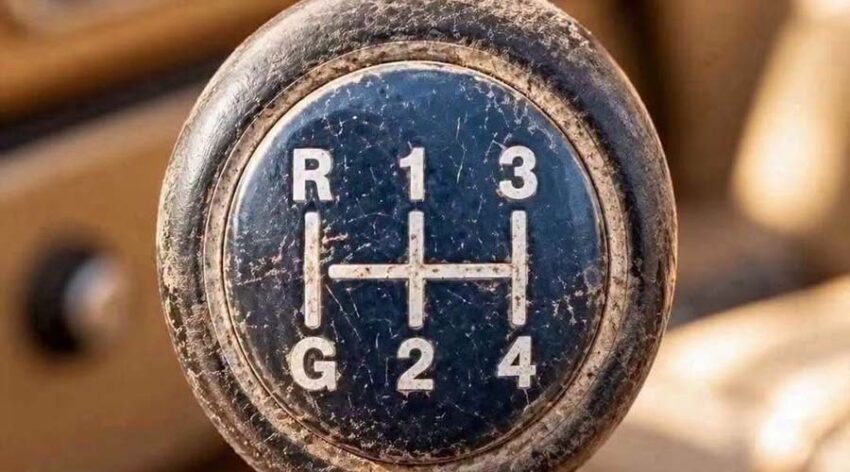
For generations of drivers, the sight of an old manual gearshift brings back memories of a completely different era of motoring. The worn black knob, marked with the familiar numbers one through four, reverse, and a mysterious letter “G,” represents a time when driving required more than simply pressing the accelerator and steering. While most people recognizThe Forgotten Gear That Young Drivers Never Knew
e the standard gears, the additional letter has left younger drivers scratching their heads. What exactly did “G” stand for, and why did some older vehicles have a special gear that modern cars rarely feature? The answer reveals a fascinating chapter in automotive history, when engineers designed transmissions to handle challenges that ordinary passenger cars seldom encountered.
The mysterious “G” commonly stood for Gelände, a German word meaning terrain or off-road ground. In certain older vehicles, particularly utility trucks and four-wheel-drive models, this designation identified an exceptionally low gear intended for demanding driving conditions. Unlike ordinary first gear, which was designed to get a vehicle moving during everyday use, the G gear provided greater torque multiplication at very low speeds. This made it especially useful when climbing steep hills, navigating muddy roads, pulling heavy loads, or moving across uneven terrain. Drivers who understood its purpose could use the gear to maintain control in situations where a conventional transmission might struggle.
One well-known example of this arrangement appeared in older Mercedes-Benz utility vehicles, including certain Unimog models and other specialized trucks. These machines were engineered for agricultural work, construction, military service, and demanding rural environments. Their transmissions often prioritized strength, durability, and precise low-speed movement rather than rapid acceleration. The extra-low gear allowed drivers to move heavy equipment or tackle difficult ground without constantly slipping the clutch. In everyday driving, however, operators could generally start in first gear and leave the special low gear unused. This unusual arrangement explains why the shift pattern could seem confusing to someone accustomed to an ordinary four-speed manual transmission.
For experienced drivers, mastering such a gearbox required patience and mechanical understanding. Before selecting the extra-low gear, the operator needed to consider the vehicle’s speed, the terrain, and the manufacturer’s instructions. These gears were not intended for ordinary highway driving, and using them incorrectly could place unnecessary stress on mechanical components. In rural communities, where vehicles regularly transported supplies across fields, forest tracks, and steep roads, the additional gear could make a significant difference. Older drivers often remember learning these techniques from parents, grandparents, or experienced coworkers who understood the distinctive sounds and movements of manual transmissions.
Today, modern automatic transmissions, advanced four-wheel-drive systems, and electronic traction controls have made many traditional gearbox arrangements less familiar to younger generations. Yet the unusual letter G remains a reminder of how vehicle design once reflected the practical needs of farmers, workers, and off-road travelers. Although not every manufacturer used the same lettering, the designation on this particular style of gearbox points to a specialized low gear rather than an ordinary fifth driving position. For those who remember operating these vehicles, the photograph is more than a mechanical curiosity. It represents an era when understanding every gear, listening carefully to the engine, and knowing how to handle difficult terrain were essential parts of being a skilled driver.