
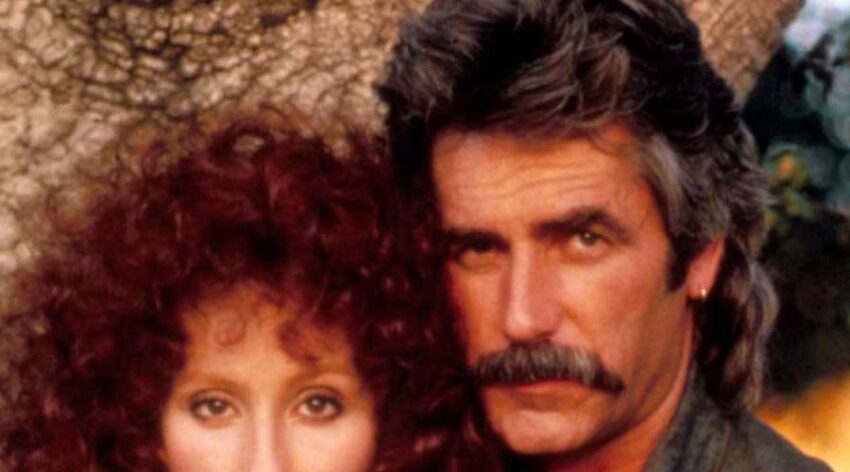
Released on March 8, 1985, Mask is widely regarded as one of the most moving and heartfelt dramas of the 1980s — a film that brought together powerhouse performances, powerful storytelling, and a true‑life tale that continues to resonate with audiences decades later. Directed by Peter Bogdanovich and written by Anna Hamilton Phelan, Mask stars Cher, Eric Stoltz, and Sam Elliott, and is based on the remarkable real‑life story of Roy L. “Rocky” Dennis, a young man born with a rare and debilitating medical condition.
At its core, Mask is a film about love, resilience, and dignity. The story follows Rocky Dennis (portrayed by Eric Stoltz), a bright, witty, and determined teenager born with craniodiaphyseal dysplasia — a rare genetic disorder that causes excess calcium to build up in the skull, creating severe facial deformities and drastically shortening life expectancy. Despite being told he would never live past childhood, Rocky defies expectations, living until the age of 16 and striving to make the most of the life he has.
Cher delivers a powerful performance as Florence “Rusty” Dennis, Rocky’s fiercely protective and unconventional mother. Rusty is a motorcycle‑riding, free‑spirited woman whose tough exterior masks a deep, unshakeable love for her son. Rather than hiding Rocky away, she fights vigorously for his right to be treated with dignity — from enrolling him in public school to helping him find friendship and love, even in the face of ignorance and prejudice.
One of the film’s most poignant features is its exploration of how society treats those who are different. Rocky faces constant curiosity, pity, and sometimes outright cruelty because of his appearance, yet his intelligence, humor, and kindness gradually win over those around him. Mask challenges audiences to look beyond physical appearance and recognize the person within, a message that remains just as relevant today as it was in the 1980s.
Eric Stoltz’s portrayal of Rocky was transformative. The prosthetic makeup, which was so effective that even cast and crew members sometimes didn’t recognize him outside of costume, earned the film an Academy Award for Best Makeup and remains one of the most memorable aspects of the movie.
In addition to Stoltz and Cher, Mask features strong supporting performances. Sam Elliott plays Gar, a friend and father figure to Rocky, whose calm strength and loyalty provide a stabilizing presence in Rusty and Rocky’s often turbulent world. Laura Dern appears as Diana, a blind girl who befriends Rocky not in spite of his appearance but because she sees his essence — highlighting a moving subplot about acceptance and love without judgment.
The making of Mask also had its own share of behind‑the‑scenes stories. Cher reportedly wanted her real‑life boyfriend at the time, Val Kilmer, to play her character’s romantic interest, but the role ultimately went to Sam Elliott instead. The production took advantage of shooting in many of the real neighborhoods where the true story took place, adding authenticity to the film’s look and feel.
Musically, the film’s original soundtrack was intended to feature songs by Bruce Springsteen, a favorite of the real Rocky Dennis, but rights issues led to a last‑minute swap with songs by Bob Seger in the theatrical release. Years later, Springsteen worked to get his music included in the director’s cut, restoring some of the original intentions for the film’s sound.
Critics responded strongly to Mask upon its release. Both Cher and Eric Stoltz earned Golden Globe nominations, and Cher won the Best Actress Award at the 1985 Cannes Film Festival for her portrayal of Rusty Dennis. Reviewers praised the film for its emotional depth, the authenticity of its performances, and its sensitive treatment of challenging subject matter.
While the movie takes some artistic liberties — such as fictionalized scenes and changes to real‑life events (for example, the film depicts a cemetery visit that didn’t happen in reality) — its heart remains faithful to the spirit of Rocky’s life and the love shared between him and his mother.
Beyond awards and accolades, Mask has endured because it speaks to universal human themes: the fierce love of a parent, the courage to live boldly in the face of adversity, and the importance of empathy. In portraying Rusty’s dogged advocacy and Rocky’s joyful resilience, the film highlights how we all wear masks of one kind or another — social expectations, personal fears, cultural norms — yet what truly defines us is what lies beneath.
Film historians and audiences alike continue to revisit Mask not just as a period piece of the 1980s but as a timeless story that challenges assumptions and celebrates the dignity of every individual. Its success at the box office and its lasting presence in popular culture testify to its deep emotional resonance.
Even today, Mask is remembered as a movie that brought attention to issues of physical difference and personal acceptance with heartfelt performances and honest storytelling. Cher’s performance, in particular, remains one of the most nuanced and moving depictions of motherhood ever captured on screen — gritty, tender, flawed, and undeniably human.
In the end, Mask isn’t just a film about a boy with a rare disorder or a mother who refuses to let the world define her son. It’s a celebration of the unbreakable bond between parent and child, a challenge to our perceptions of beauty and normalcy, and a reminder that everyone’s story matters — especially those lived on the margins.