
There’s something quietly powerful in the way the Osmond family has been speaking about this loss—because the words carry more than grief. They carry the weight of someone who was never just part of the story, but the one helping hold it together.
Alan Osmond, the eldest brother and a founding force behind The Osmonds, passed away on April 20 at the age of 76, leaving behind not only a legacy in music but a family that clearly leaned on him in ways the public rarely saw.
He is survived by his wife of more than five decades, Suzanne, their eight sons, and an extended family that now includes 30 grandchildren and five great-grandchildren—a reflection of a life rooted as much in family as it was in fame.
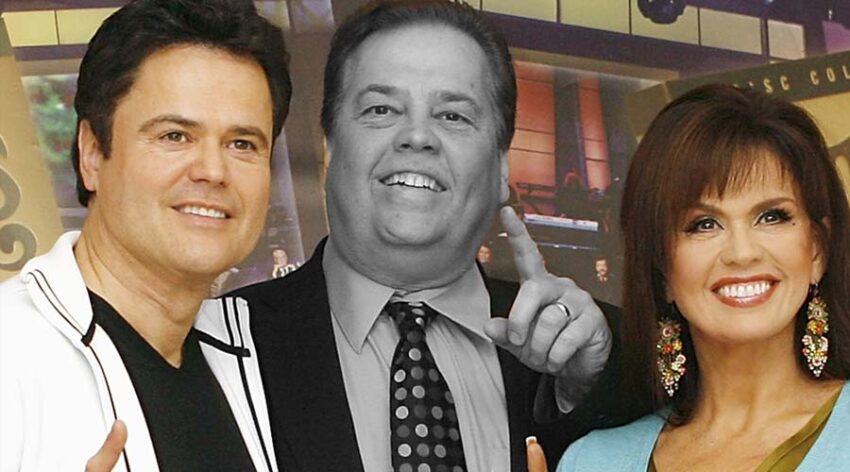
Alan Osmond attends a ceremony where his brother and sister Donny and Marie Osmond receive a star on the Las Vegas strip following more than 1,700 performances at the Flamingo Las Vegas on October 04, 2019 in Las Vegas, Nevada. (Photo by Denise Truscello/WireImage)
Long before the spotlight found the Osmonds, Alan was shaping the path forward. As the oldest sibling, he helped guide the group’s direction, both creatively and personally. He co-wrote major hits like “One Bad Apple” and “Crazy Horses,” songs that helped define the group’s sound and cement their place in pop culture.
But behind the success, there was always something quieter about him.
When he was diagnosed with multiple sclerosis decades ago, he gradually stepped away from performing. Yet those close to him suggest he never stepped away from responsibility. If anything, his role simply shifted—from being on stage to being the steady presence behind it.
His own words reflected that resilience: he acknowledged the illness, but refused to let it define him.
That sense of quiet strength comes through most clearly in the tributes shared by his siblings.
Donny Osmond spoke with deep gratitude, describing Alan as someone who carried more than his share of the burden so others could succeed. It wasn’t framed as sacrifice in a dramatic sense, but as something constant and dependable—the kind of support that shapes a family over time.
Merrill Osmond reflected on being able to share a final moment with him, describing Alan not just as a performer, but as a creator, a man of faith, and someone whose influence extended far beyond music.
And then there was Marie Osmond, whose tribute offered something more personal—something that revealed the role Alan played not just as a brother, but as a protector. She spoke about his watchful presence during her rise to fame, his steady concern, and the way he showed up whenever she needed him.
Her recollection of his final words adds another layer to the story—one rooted in faith, reunion, and a sense of continuity beyond loss. In that moment, his focus wasn’t on what he was leaving behind, but on who he hoped to see again.
That detail resonates even more given the timing.
Alan’s passing comes just over a year after the death of his brother Wayne Osmond, a loss that had already left a visible mark on the family. Now, the absence feels deeper—not just because another member is gone, but because of who Alan was within that dynamic.
He wasn’t simply one of the voices.
He was, by many accounts, the foundation.
Taken together, the tributes don’t just recount achievements or milestones. They sketch a portrait of a man who balanced public success with private responsibility, who helped build something enduring while remaining largely out of the spotlight himself.
In the end, what stands out isn’t just the music or the fame.
It’s the sense that behind one of the most recognizable family acts in entertainment history was someone who quietly ensured everything—and everyone—stayed connected.