
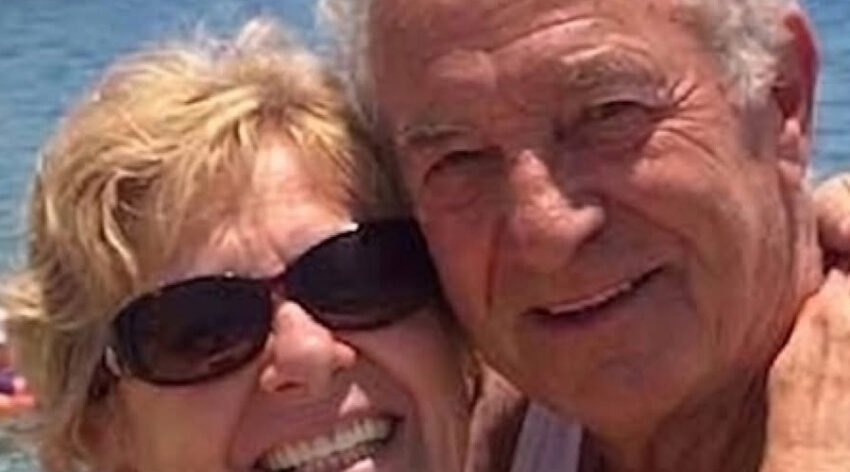
I met a charming stranger and fell in love on my first solo trip after losing my husband — then I discovered he had a reason for approaching me
For most of my life, I had been the woman who chose the safer option.
I married young, raised a daughter, kept the same job for thirty years, and planned vacations around what my husband wanted. Even after retirement, I still needed a reason before spending money on myself.
When Leonard died five years ago, that cautious little world became even smaller.
We had been married for forty-one years. His death left me with a quiet house, a closet full of clothes I couldn’t throw away, and more empty evenings than I knew what to do with.
My daughter, Gwen, worried about me.
She invited me to dinner, brought groceries I hadn’t asked for, and tried to convince me to join clubs. I always found a polite excuse.
Then one afternoon she asked when I had last done something simply because it made me happy.
I couldn’t remember.
Two weeks later, I booked a seven-day trip to Malta.
The night before my flight, I nearly canceled it. Instead, I made myself a promise that sounded almost childish for a woman my age: for one week, unless something felt unsafe, I would stop hiding behind no.
I would try unfamiliar food, get on boats, speak to strangers, and enter places without first reading every review online.
For once, I would say yes.
On my second morning in Valletta, I got hopelessly lost.
I was standing beside an old stone building with my map turned the wrong way when a man nearby started laughing. He wasn’t cruel about it, which somehow made me laugh too.
His name was Douglas.
He was seventy, widowed, and had the kind of calm humor that made conversation easy. He showed me where I had gone wrong and asked whether I wanted coffee before continuing my search.
Normally, I would have thanked him and left.
Instead, I remembered my promise.
I said yes.
Coffee became two hours.
Douglas told me he had lost his wife, Estelle, seven years earlier. He lived alone in England, had one daughter, and had started traveling after realizing grief had turned him into someone who spent more time remembering life than living it.
I understood that more than I wanted to admit.
The next morning, we had breakfast.
The day after that, we took a ferry to Gozo. Douglas held my hat when the wind nearly sent it into the water, and I laughed harder than I had in years.
Nothing about him seemed dramatic.
That was what I liked.
He didn’t talk as though we had been brought together by fate. He simply seemed pleased to be beside me, whether we were eating pastries, walking along the harbor, or arguing over which church we had already passed twice.
By the fourth day, I stopped checking the time when I was with him.
By the sixth, I found myself dreading my flight home.
That frightened me.
I had loved Leonard for most of my adult life. Even after his death, part of me had believed loving anyone else would somehow reduce what we’d had.
Douglas never asked me to compare them.
One evening beside the sea, he told me he was glad I had agreed to coffee that first morning.
“So am I,” I said.
It was one of the few answers that week I didn’t have to force myself to give.
On my final evening, Douglas invited me to dinner at a small restaurant overlooking the harbor. He said there was something he wanted to show me before I left.
The restaurant was beautiful, with old stone walls and small tables lit by candles.
But the moment we entered, the waiter smiled at Douglas.
He greeted him by name and said it was good to see him again.
I looked at Douglas.
Days earlier, he had told me he’d never eaten there.
For half a second, something uncomfortable passed across his face. Before I could ask about it, his phone rang.
He glanced at the screen and said he needed a moment.
Ten minutes passed.
Then fifteen.
Eventually, I became worried enough to look for him.
I walked past the kitchen and heard voices coming from a small courtyard behind the restaurant.
Douglas was standing beneath a string of yellow lights.
A woman in her forties stood opposite him.
She had his eyes.
I was about to step away when I heard her tell him that he had waited too long and needed to tell me the truth before I flew home.
Douglas answered quietly.
He said he’d intended to tell me on the first day, but things had changed.
Then the woman asked whether falling in love with me somehow made the original lie disappear.
I felt the blood drain from my face.
I stepped into the courtyard.
Douglas turned and looked as though someone had struck him.
The woman introduced herself as Felicity, his daughter.
I barely heard that part.
I wanted to know what lie they were discussing.
Douglas didn’t try to touch me. He asked me to sit, but I remained standing until he finally pulled an old photograph from inside his jacket and placed it on a nearby table.
My husband was in it.
Leonard looked perhaps forty.
Beside him stood a much younger Estelle.
Behind them was the same harbor I had spent all week admiring.
I picked up the photograph with both hands.
Leonard had told me he’d never been to Malta.
Douglas explained that after Estelle died, Felicity helped him clear out the attic. Hidden inside an old leather case, they found photographs, letters, and several hotel receipts dating back more than thirty years.
At first, Douglas thought Estelle had simply kept things from an old friendship.
Then one of the letters changed everything.
Leonard had written it.
The relationship between them had lasted for almost three years.
Not continuously, but long enough for them to meet during work trips in Malta, London, and once in New York.
I felt sick.
I remembered those years.
Gwen had been in elementary school. Leonard traveled often for work, and I spent those weeks packing lunches, helping with homework, and waiting for his phone calls at night.
He always came home with something.
Perfume.
Chocolate.
A small gift for Gwen.
I had interpreted those things as proof that he missed us.
Now I wondered how many had been bought after saying goodbye to another woman.
But Douglas still hadn’t reached the part that explained why he’d known me.
Felicity did.
She quietly placed another photograph on the table.
It was Leonard holding a baby.
The baby was Felicity.
I stared at Douglas.
He looked away.
A DNA test done the previous year had confirmed what Estelle’s letters suggested.
Douglas was not Felicity’s biological father.
Leonard was.
For several seconds, I couldn’t understand the words.
My husband had another daughter.
Gwen had a half-sister.
And the man I had spent the past week slowly falling in love with had raised Leonard’s child without knowing the truth.
Douglas learned all of it after Estelle was already gone.
He had no wife left to confront and no Leonard to demand answers from.
Felicity had initially refused to contact my family. She was nearly fifty, had children of her own, and didn’t want to appear at a stranger’s door asking for a dead man’s place in her life.
Douglas felt differently.
He became obsessed with understanding Leonard.
He searched his name online.
That was how he found photographs of me and Gwen.
Then, several months later, Gwen posted publicly about being proud of her mother for finally taking her first solo trip to Malta.
Douglas saw it.
He booked a flight three days later.
My stomach turned.
“So you came here because of me.”
He admitted that he had.
He had planned to approach me once, explain who he was, and ask whether I wanted to know about Felicity.
But seeing me on the street with my map upside down had unsettled him.
I hadn’t looked like the woman he’d imagined while reading Leonard’s letters.
I looked lost, nervous, and embarrassed.
When I laughed at myself, he laughed too.
Then he asked me for coffee.
He told himself he’d explain everything before we finished our drinks.
He didn’t.
The longer we talked, the harder telling me became.
Every day that followed made the lie larger.
I looked back over the week and felt as though someone had moved all the furniture inside my memories.
The coffee.
Gozo.
The long walks.
The evening beside the sea.
I had believed I had met a stranger.
Douglas had known my name before I introduced myself.
I asked whether any part of our time together had been real.
His answer was painful because it wasn’t simple.
He said his reason for approaching me had been connected to Leonard, but nothing after that had gone the way he expected. He had wanted answers about the man who had fathered Felicity and unknowingly left Douglas raising another man’s child.
Instead, he had met Leonard’s widow.
And liked her.
Then cared for her.
Then fallen in love with her.
I told him I couldn’t separate those things yet.
Felicity left us alone.
Douglas then handed me a sealed envelope.
My name was written on the front in Leonard’s handwriting.
I almost dropped it.
Estelle had kept it with the letters.
Leonard had apparently written it near the end of their relationship but never sent it.
I opened it in that courtyard.
The letter wasn’t romantic.
That somehow made it worse.
Leonard admitted enough for me to understand what he’d done. He wrote that he had spent several years behaving like two different men and that neither woman deserved the version of him she’d been given.
Then he wrote about Felicity.
He knew she might be his daughter.
Estelle had told him.
He had wanted to confirm it, but by then both of them had decided to end the relationship and protect their families.
Protect.
I stared at that word for a long time.
Leonard had returned home to me and Gwen and behaved as though nothing had happened.
Estelle stayed with Douglas and allowed him to raise a child who might not have been his.
They had called that protecting us.
In reality, they had made the choice for everyone.
Douglas apologized for doing something frighteningly similar to me.
He had decided I should know the truth, then manipulated the circumstances instead of giving me the choice honestly.
That was the first thing he said that night that reached me.
He wasn’t asking me to forgive him.
I told him I needed to leave.
He offered to walk me back to my hotel, but I refused.
For the first time during that trip, saying no felt more important than keeping my promise to say yes.
I packed until almost dawn.
I cried over Leonard.
Then over Gwen.
Then, unexpectedly, over Douglas.
Part of me wanted the week to remain what I had thought it was.
But another part knew the good moments still belonged to me.
I had gone to Malta.
I had crossed the sea on a ferry.
I had eaten food I couldn’t pronounce and danced badly with strangers in a square.
Douglas’s secret couldn’t erase that.
I flew home the next morning.
For almost two months, I didn’t contact him.
The hardest conversation was with Gwen.
I gave her Leonard’s letter and told her about Felicity.
My daughter cried so hard I thought she might be sick.
She was furious with her father, then guilty for being furious with a dead man she’d loved.
I understood.
Eventually, Gwen agreed to speak with Felicity.
Their first video call lasted twenty minutes.
Their second lasted almost two hours.
They discovered the same laugh.
The same habit of twisting rings when nervous.
Felicity had Leonard’s eyes.
Gwen had spent her entire life believing those eyes belonged only to her.
Watching them meet was painful, but it was also strangely tender.
Neither woman had created what happened.
They had simply inherited it.
Douglas stayed away.
He sent one letter saying that he was sorry and that he would not contact me again unless I wanted him to.
That mattered.
Three months after Malta, I wrote back.
I told him that what he had done was wrong. I also told him that I no longer believed every good moment between us had been fake.
We started with letters.
Then occasional phone calls.
Nearly six months later, Douglas came to visit me.
He stayed in a hotel.
Gwen met him before I spent time alone with him, which I suspect was less a meeting and more an interrogation.
He accepted it.
Trust did not return because Douglas apologized beautifully.
It returned because he stopped deciding what I should know.
If something was uncomfortable, he told me anyway.
If I became angry, he allowed me to be angry without trying to rush me toward forgiveness.
A year after my first trip, I returned to Malta.
Douglas was waiting at the airport.
There was no pretend coincidence this time.
No invented first visit.
Felicity joined us for dinner on my third evening.
We sat in the same harbor restaurant where everything had fallen apart the year before.
It still hurt to be there.
But it didn’t destroy me.
Douglas and I walked into the courtyard after dinner.
He told me he wanted to continue whatever we had built since that terrible night, but only if I still wanted it too.
This time, there was no surprise waiting behind the question.
I looked through the archway toward the harbor and thought about the woman I had been before my first flight.
She had believed courage meant saying yes before fear could stop her.
At sixty-eight, I understood it differently.
Sometimes courage was getting on the plane.
Sometimes it was walking away from a man you loved because he had lied to you.
And sometimes, after enough time and enough truth, it was choosing to sit beside him again and see what happened next.
I took Douglas’s hand.
Not because Leonard and Estelle had connected our lives decades earlier.
Not because I believed everything happened for a reason.
I did it because after learning exactly how our story had begun, I finally had the freedom to decide whether I wanted it to continue.