
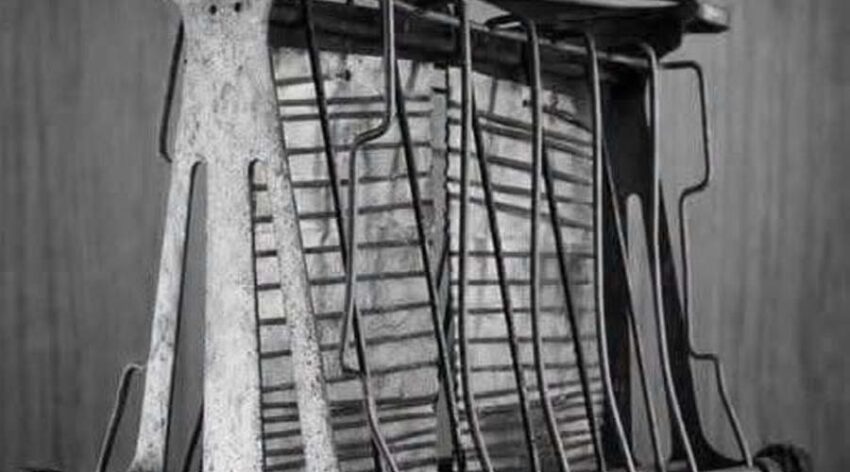
An early milestone in kitchen automation, the turnover toaster used exposed electric heating elements to brown bread, requiring users to manually flip the slices and closely monitor the process to achieve the desired toastiness before pop-up mechanisms existed…
The unfamiliar appearance makes more sense when the toaster is understood as a tool that required an active user throughout the process. Bread did not simply disappear into a slot and return automatically. The heating elements were exposed, and the person making breakfast had to watch the surface of the slice, decide when it had browned enough, and turn it to expose the other side. The mechanism and the routine were closely connected.
That manual step is the key to the name turnover toaster. The device helped supply heat, while the user still controlled the sequence. A modern appliance can hide much of that process behind a casing and an automatic cycle. The older design made the transformation visible. Someone standing beside it could observe the bread changing and decide when to stop.
The object therefore illustrates a transition in everyday convenience. It did not remove all the work of making toast, but it brought electric heating into a task that many people now associate with a fully automatic appliance. The account calls it an early milestone in kitchen automation because part of the job had been taken over by a purpose-built device, even while other parts remained in human hands.
There is also a difference between recognizing an object and knowing how it was used. A photograph may show a metal frame, heating surfaces, and supports without immediately revealing their purpose. Once the bread and the turning motion are imagined, the arrangement becomes easier to interpret. Details that first seem strange begin to look practical within the routine for which they were designed.
Looking at an old appliance can make familiar habits seem less inevitable. The current form of a toaster represents one way of organizing heat, timing, and convenience. The turnover design organized the same task differently. Comparing them offers a small example of how household tools can change the amount of attention an ordinary activity requires.
The surviving object is best approached as a historical item rather than assumed to be ready for modern use. The description does not establish its age, manufacturer, electrical condition, or suitability for operation. Exposed heating elements are part of the design described, but a photograph cannot provide an assessment of an individual appliance.
Its interest lies in what it reveals about a routine: someone preparing a slice of bread, watching carefully, turning it, and judging the result. That simple sequence connects the unusual object to a recognizable breakfast task. The answer to the mystery is not an exotic machine, but an earlier version of a tool that remains familiar in kitchens today.
Even without operating the device, that imagined routine helps explain its form. The supports held the bread close to the heat, and the user supplied the attention that an automatic cycle would later provide.