
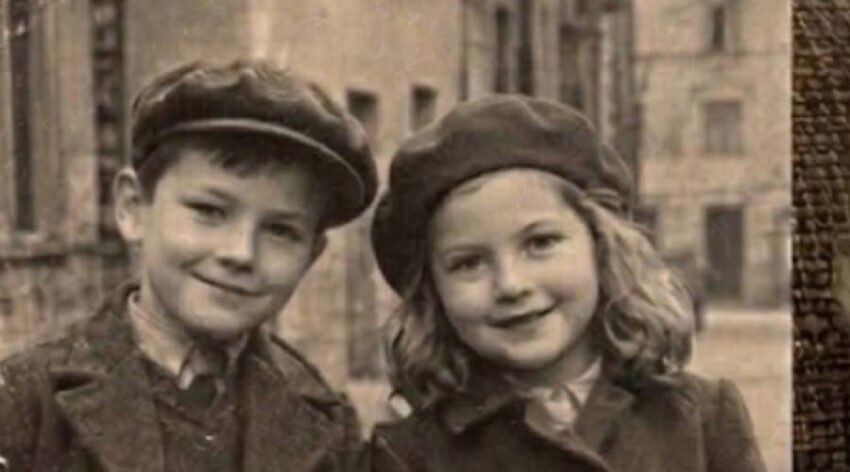
At ninety-five, I thought I had made peace with most things in my past.
I had lived through a war, crossed an ocean, raised three children, and buried the man I’d been married to for sixty-one years. There were people I missed terribly, but I had learned to be grateful for the life I’d been given.
These days, I lived with my daughter, Vivian, in a quiet neighborhood outside Chicago.
She worried about me constantly.
“Mom, you shouldn’t be carrying that laundry basket,” she’d say.
“Vivian, I’ve been doing laundry since before you were born.”
“That’s exactly why you should let me do it now.”
I loved my daughter, but sometimes she forgot I was still capable of making my own decisions.
My granddaughter, Rosie, understood me a little better. She was twenty-nine, worked at a local museum, and visited almost every evening.
She was also the only person who knew I kept an old metal tin at the back of my closet.
Inside were photographs, letters, and a few things I’d carried with me from Poland.
Rosie had asked about it several times.
“Grandma, what’s so special about that box?”
“Some of the people in there have been gone longer than you’ve been alive, sweetheart.”
She usually smiled and left it alone.
I never imagined that one of those people would suddenly return to my life.
I was born in Warsaw, Poland, and my parents named me Halina.
When we arrived in America, people had trouble pronouncing it, so I eventually became Lena.
But in the little house where I grew up, everyone called me Hala.
Our family lived on a narrow street lined with brick houses and small gardens. The family next door had a son named Marek, who was one year older than me.
Marek and I spent nearly every afternoon together.
We walked to school, shared whatever food our mothers packed, and played in the courtyard until it became too dark to see.
He was a terrible student when it came to spelling, but he could repair almost anything.
Once, when I broke the wheel on my wooden toy cart, he spent an entire afternoon fixing it.
“There,” he announced proudly. “Better than new.”
The wheel fell off again before I’d reached the gate.
He looked so disappointed that I couldn’t bring myself to laugh.
When I was eight, Marek decided we should get married.
We were sitting beneath a chestnut tree behind his house when he made the announcement.
“When we’re grown up, you’re going to be my wife.”
I looked at him suspiciously.
“Why?”
“Because I like you more than anybody else.”
“Even your mother?”
He considered that carefully.
“Almost as much as my mother.”
I folded my arms.
“Then you have to promise you’ll always be nice to me.”
“I promise.”
“And you can’t make me eat cabbage.”
He laughed.
“Fine. No cabbage.”
A few days later, he gave me a tiny wooden heart he’d carved himself. Our initials were scratched into the back, although the letters were crooked and one corner was chipped.
“This is so you won’t forget,” he told me.
I tied a piece of red thread around it and wore it beneath my dress.
For a little girl, it seemed like the most wonderful gift in the world.
Then, in 1939, everything changed.
My father came home one evening looking frightened. He and my mother talked behind their bedroom door for hours.
The following morning, they told me we were leaving Poland.
“Where are we going?” I asked.
“America,” my father replied.
“But what about Marek?”
My mother knelt beside me.
“We can’t take everyone with us, darling.”
I cried and begged them to let me stay. I didn’t understand the danger that was coming, only that I was being taken away from the place and people I loved.
On our last afternoon, I found Marek sitting beneath our tree.
“We’re leaving tomorrow,” I told him.
He stared at me.
“For how long?”
“I don’t know.”
He was quiet for a while, then reached for the wooden heart around my neck.
“Will you come back?”
“I’ll try.”
“Then I’ll wait for you.”
I hugged him and cried into his jacket.
He made me promise that when we were older, we’d find each other again.
I promised.
The next morning, my family left Warsaw.
I remember looking through the window as our street disappeared behind us.
I never saw Marek waving goodbye.
Starting over in Chicago wasn’t easy.
My father worked long hours, my mother cleaned houses, and I struggled to understand my teachers.
We wrote letters to relatives in Poland, but as the war spread, fewer replies arrived.
Eventually, the letters stopped completely.
For years, I wondered whether Marek and his family had survived.
My parents tried to find information, but there was very little they could do.
As I grew older, I stopped asking so many questions. It wasn’t because I’d forgotten him. I simply couldn’t bear hearing that there was no news.
When I was twenty-three, I met a kind mechanic named Arthur at a church picnic.
He was handsome, patient, and absolutely hopeless at dancing.
We married the following spring.
Arthur gave me a beautiful life. We bought a small house, raised our children, and spent nearly every Sunday having dinner with relatives.
Sometimes, while sorting through old photographs, I’d come across the wooden heart Marek had given me.
I’d hold it for a moment, wondering what had become of that little boy.
Then I’d put it away.
I loved Arthur deeply, and I never regretted marrying him.
When he passed away four years ago, I felt as though someone had taken half my home with him.
Afterward, Vivian persuaded me to move into her house.
I missed having someone beside me at breakfast. I missed Arthur complaining about the weather and falling asleep in front of the television.
But I had my children and grandchildren, and I was grateful for them.
I never expected to hear Marek’s name again.
One Thursday evening, Rosie came home looking unusually serious.
She was carrying a small package wrapped in brown paper.
“Grandma, something strange happened at work today.”
I looked up from my crossword puzzle.
“Did someone steal another painting?”
She smiled faintly.
“No. An elderly man came to the museum and asked about you.”
“About me?”
“He wanted to know whether my grandmother was originally from Warsaw.”
My pencil stopped moving.
“What did you tell him?”
“I said yes. Then he asked whether your real name was Halina.”
I felt a strange tightening in my chest.
Very few people in America knew that name.
“Did he tell you who he was?”
“No. He seemed nervous, and he said he wasn’t sure you’d remember him.”
Rosie placed the package on the table.
“He asked me to give you this.”
I stared at it.
“And Grandma, he wanted me to tell you something.”
“What?”
She hesitated.
“He said you have to keep your promise.”
For a moment, I couldn’t move.
I carefully untied the string and unfolded the paper.
Inside was a little wooden heart.
The red thread had faded almost to brown, but I recognized the crooked letters carved into the back.
H and M.
I touched the chipped corner with my thumb.
“Oh, Marek,” I whispered.
Rosie pulled out a chair.
“Grandma? Who’s Marek?”
I couldn’t answer immediately.
After eighty-seven years, the little boy who’d promised to marry me had somehow found his way back.
When I explained everything, Rosie listened with tears in her eyes.
Vivian, however, was much less enthusiastic.
“Mom, you don’t know who this man is.”
“I know who gave me that heart.”
“That doesn’t mean he’s the same person.”
I understood her concern, but I wasn’t willing to ignore the package.
Rosie told us that the man had found her name through a museum article about Polish immigrant families. He’d recognized our family surname in a photograph I’d donated years before.
“He said he would come back tomorrow,” she explained.
“Then I’ll go with you,” I replied.
Vivian immediately objected.
“Absolutely not.”
“Vivian, I’m ninety-five, not five.”
“You’re talking about meeting a stranger!”
“Then come along and make sure he behaves himself.”
That seemed to settle the matter.
The following morning, Vivian drove Rosie and me to the museum.
We waited in a small room near the entrance.
At eleven o’clock, Rosie looked toward the door.
“Grandma, that’s him.”
An elderly man stood in the hallway, holding a dark wool coat over one arm.
His shoulders were bent, and he walked slowly with a cane.
He stopped when he saw me.
For several seconds, neither of us spoke.
Then he said something I hadn’t heard in eighty-seven years.
“Hala?”
My eyes filled with tears.
Only one person had ever said my childhood nickname quite that way.
“Marek?”
He smiled.
“I was beginning to think you’d forgotten me.”
I laughed through my tears.
“You’re a little late.”
He approached me carefully, and I held out both hands.
His fingers were thin and trembling, but they were warm.
For a moment, I remembered the boy who used to carry my schoolbooks and argue with me beneath the chestnut tree.
Rosie quietly led Vivian into the next room.
Marek and I sat together at a small table.
I had a hundred questions, but only one came out.
“Where have you been?”
Marek told me his family had survived the war, although they’d lost their home and several relatives.
He’d eventually married a woman named Aniela and settled in Canada.
They’d had a happy marriage, but no children.
Aniela had passed away six years earlier.
“I’m sorry,” I told him.
“She was a wonderful woman, Hala. I think you would have liked her.”
We talked about our families, our childhood street, and all the years we’d spent apart.
Then he told me something that made my heart sink.
“I found your family once,” he admitted.
I stared at him.
“What do you mean?”
“In 1967, I traveled to Chicago. I had an old address for your parents, and someone told me where you lived.”
“You came to Chicago?”
He nodded.
“I went to your house.”
“Then why didn’t you knock?”
He looked down at his hands.
“I saw you in the front yard with Arthur and your children. You were laughing. Your husband was carrying a little boy on his shoulders.”
I remembered that house and those afternoons.
“You should have knocked, Marek.”
“I thought you had a good life. I didn’t want to confuse you by appearing after so long.”
“You could have written me a letter.”
“I know.”
I felt unexpectedly angry.
For so many years, I’d wondered whether he was alive, and he’d known exactly where to find me.
“You decided I wouldn’t want to hear from you?”
He looked ashamed.
“I was afraid you’d think I was trying to interfere with your marriage.”
“Arthur would have welcomed you. He knew about my childhood in Poland.”
Marek wiped his eyes.
“I made a mistake. I’ve regretted it for a long time.”
We sat quietly.
Then I reached across the table.
“I’m glad you came this time.”
He smiled, but there was something else he wanted to tell me.
“Hala, there’s a reason I sent the heart.”
I waited.
“You remember promising to marry me?”
“Of course.”
He chuckled.
“Well, I’ve already been married, and so have you. I think we can consider ourselves released from that arrangement.”
I smiled.
“Good. I was worried you’d expect me to cook dinner every night.”
He laughed.
Then his expression softened.
“But do you remember the other promise?”
I frowned.
“What other promise?”
“The night before you left Poland, you told me you were afraid we’d never see our street again.”
I remembered crying beneath the chestnut tree.
“You said that when we were old, we’d come back together, even if we needed walking sticks.”
Something stirred in my memory.
Marek continued.
“And you said neither of us should have to go back alone.”
I covered my mouth.
I’d forgotten those words.
He reached into his coat and took out an old photograph of our childhood street.
“Hala, I’ve been planning one last trip to Warsaw. I wanted to ask whether you’d come with me.”
When I told Vivian, she nearly dropped her coffee.
“Poland? Mom, you’re ninety-five!”
“I’m aware of my age, darling.”
“And you’ve only just met this man again!”
“I’ve known him since I was a child.”
“You haven’t seen him in almost ninety years!”
Rosie tried to calm her mother.
“Mom, let’s at least hear Grandma out.”
Vivian folded her arms.
Then she asked the question I’d been avoiding.
“Why has he suddenly returned now? How do we know he doesn’t want something from you?”
I understood what she meant.
Arthur had left me a comfortable amount of savings, and Vivian worried that someone might take advantage of me.
The following afternoon, I asked Marek directly.
He didn’t seem offended.
“My wife and I saved enough for retirement,” he explained. “I don’t need your money, Hala.”
“Then why now?”
He was quiet for a moment.
“Last winter, I fell and spent several weeks in the hospital. For a while, I wasn’t sure I’d ever walk properly again.”
He looked at his cane.
“When I recovered, I started thinking about all the things I’d put off. Finding you was one of them.”
“Why didn’t you contact me yourself?”
“I wasn’t sure you were still alive. Then I found the museum article with your family photograph.”
He smiled sadly.
“I thought perhaps your granddaughter could tell me whether you wanted to see me.”
I believed him.
But I also told him something important.
“Please don’t make plans for me without asking. My family already does enough of that.”
He laughed.
“I promise.”
Over the next few weeks, we met several times.
Sometimes Rosie joined us. Other afternoons, Vivian came along and asked Marek questions about his life.
Gradually, she grew more comfortable around him.
When I decided I truly wanted to visit Warsaw, I spoke to my doctor.
We discussed my health, medications, and the difficulties of a long flight. After the necessary checks and arrangements, my doctor agreed that I could travel with appropriate assistance.
Rosie immediately offered to accompany us.
Vivian still worried, but eventually she helped me pack.
On the morning we left, she hugged me tightly at the airport.
“Please be careful, Mom.”
“I will.”
“And call me every day.”
“I’ll call so often you’ll get tired of hearing my voice.”
She laughed and kissed my cheek.
Two days later, Marek, Rosie, and I stood on a street in Warsaw.
It looked nothing like the place I remembered.
The war had destroyed most of the old buildings, and the houses where we’d grown up were long gone.
A local historian had helped us find the location of our childhood homes.
I stood there looking at the pavement, trying to imagine my mother’s garden and the chestnut tree where Marek had given me his wooden heart.
“It’s all changed,” I whispered.
Marek nodded.
“I know.”
I felt tears running down my cheeks.
For a while, I was sad that there was so little left of the world we’d known.
Then Marek pointed toward the end of the street.
“Do you remember the bakery?”
I smiled.
“Your mother used to send you there for bread, and you’d eat half of it before you got home.”
“Only because you helped me.”
“I certainly did not.”
He laughed.
Rosie took a photograph of us standing together.
Later, we found a small café and sat by the window with hot tea and pastries.
Marek took the little wooden heart from my hand and examined it.
“You kept it all this time?”
“Of course. You worked terribly hard on it.”
He smiled.
“I cut my finger making that thing.”
“I remember. Your mother was furious.”
We laughed until my eyes watered.
I thought about Arthur, the children we’d raised, and all the years Marek and I had lived without knowing what had happened to each other.
Neither of us wanted to change those years.
We had loved our spouses, built families, and suffered losses that the children we’d once been could never have imagined.
But sitting beside Marek in Warsaw, I was grateful that we’d been given another afternoon together.
When we finished our tea, he offered me his arm.
“Would you like to walk a little farther, Hala?”
I looked at Rosie, who was patiently waiting with my coat.
“Just a little,” I said. “My knees aren’t what they used to be.”
“Neither are mine.”
He helped me to my feet.
As we stepped outside, I slipped the wooden heart into my coat pocket and took his arm.
We walked slowly down the street, stopping whenever one of us needed to rest.
And when Marek asked whether I thought we should come back again next spring, I smiled.
“Let’s get through this trip first,” I told him. “Then we’ll see.”