
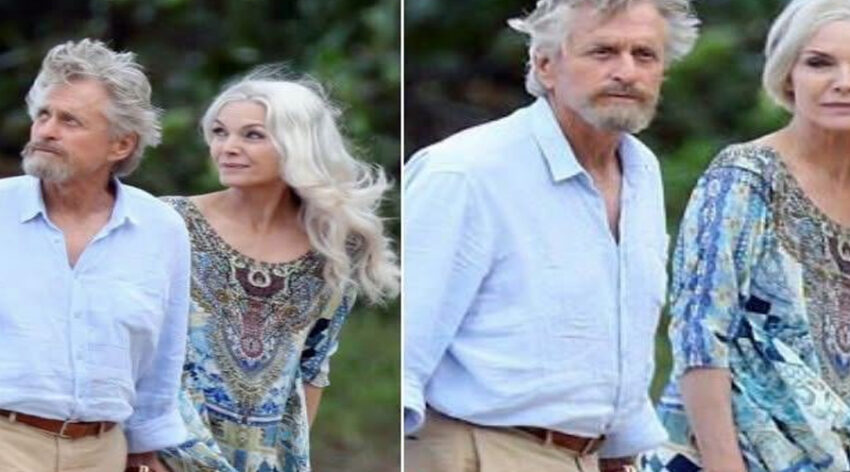
Michelle Pfeiffer and Michael Douglas were photographed outdoors in Hawaii, trading premiere-night polish for relaxed island attire. Pfeiffer wore a flowing, colorful patterned outfit, while Douglas appeared in a light blue shirt and neutral trousers. The supplied account suggests they were working on location, though it does not identify a project. What the images clearly capture is a quieter setting for performers whose screen presence has remained recognizable across generations of moviegoing audiences.
Their shared history adds another layer to the sighting. Pfeiffer was once linked to Basic Instinct, the 1992 thriller that ultimately paired Douglas with Sharon Stone. That collaboration never materialized, but Marvel later brought Pfeiffer and Douglas together as Janet van Dyne and Hank Pym in the Ant-Man films. For longtime viewers, seeing them side by side offers a reminder that Hollywood careers can follow separate paths for decades before finding an unexpectedly fitting intersection.
Michael Douglas and Michelle Pfeiffer’s later collaboration came after both had spent decades in major films. Douglas was already closely associated with thrillers and dramas by the time Basic Instinct came out in 1992. Pfeiffer was building her own body of work across genres. The account mentions the possibility of a casting connection to that film, but the pairing audiences saw in the finished film was Douglas and Sharon Stone. That distinction helps explain why a photograph of Douglas and Pfeiffer together prompts memories of both an actual collaboration and an earlier one that never came about.
In the Ant-Man films their roles were connected through a shared past. Douglas played inventor Hank Pym. Pfeiffer played Janet van Dyne, whose absence and return helped shape the story of the people around Hank. Their relationship brings some family history into films whose main plot often follows younger characters. It also provides a straightforward reason that people who saw them together in a candid photo might recognize them as a screen pair. They had already appeared as colleagues in a familiar franchise.
The picture gives viewers a different setting from the one in which they saw Pym and van Dyne. It shows the actors in everyday clothing without the laboratory, costumes or other details that would identify one of their films. The linked article suggests they may have been working, while leaving the project unnamed. The photograph on its own does not tell a viewer what they were discussing, where they went afterward or whether there was a new film underway.
What can be identified is the shared screen history that made the photograph interesting to fans. Douglas and Pfeiffer followed largely separate careers for years, then played characters whose stories depended on what they had experienced together. This candid moment recalls that established connection without adding any confirmed information about another role.
For audiences, the appeal of a less formal image is that the actors are recognizable without the characters they played. Interest in the photograph comes from that overlap between public memory and an ordinary moment. The work they did together remains the clearest context the source provides for seeing them side by side.