
The Snowflake on Walter’s Cabinet
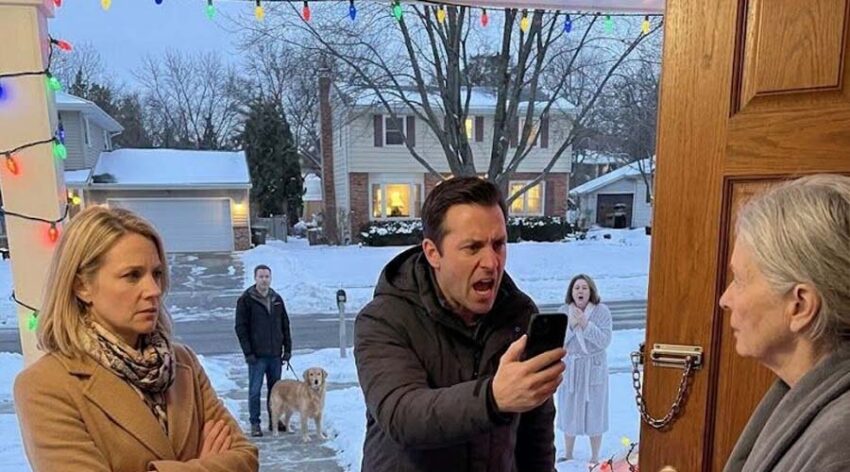
What was on his screen was a photograph of a framed check.
It had been posted at 6:40 that morning on the Westdale Community Resource Center’s page, under the headline A Gift in Memory of Walter Kessler. The check was blown up large, with my signature and the amount in black ink. Under it, forty-one people had already left comments. One of them was from Renee’s mother.
“Mom,” Adam said through the gap in the door. His voice cracked. “Renee’s mother saw this. She called at six. She’s, Mom, she’s furious.”
I left the chain on. “At whom?”
“I don’t know. At everybody.” He swallowed. “Can I please come in?”
My name is Joanne Kessler. I’m sixty-two. I was a school bookkeeper in Hamilton, Ohio, for thirty-one years, which means I’ve spent my life reconciling accounts and noticing when a number someone gave me doesn’t match the number I’m holding. I’m good at it. It has never once helped me with my family.
My husband, Walter, was a machinist at a paper-products plant until his back gave out, and then he became the man who fixed everything at Westdale on Tuesdays and Thursdays. He died two years ago in January, of a stroke, in the garage, with a carburetor in his hands. We were married thirty-seven years. He was a quiet, square, stubborn man who whistled out of tune and never learned to say “I told you so.”
Adam is thirty-six, my only child, an HVAC estimator, tall and soft-spoken, with his father’s long hands and a habit of saying “it’s fine” when it isn’t. His wife, Renee, is thirty-four, a dental office manager, quick and polished, with a gift for making a decision sound like a courtesy. Lily is nine. Noah is six. They argue every Christmas about who hands out the presents.
I took the chain off.
He came in with the cold on his jacket. He stood in my kitchen in his fleece and work boots, among the groceries I still hadn’t put away, with his phone in one hand and the other pressed to his mouth. I’d left the clementines and the cranberry sauce on the counter, because I hadn’t had the heart. He looked at them.
“You bought the whole-berry,” he said.
“You like it.”
“Mom.”
I put the kettle on. I set out two cups. It’s what I do. I think better with something in my hands, and I wanted him to see that I was calm, even if I wasn’t.
He sat at my table, in Walter’s old chair, and put the phone down between us. The photograph was still on the screen. He didn’t look at it.
“Is it real?” he asked. “The thirty-one thousand?”
“It’s real.”
“You gave it all away.”
“Yesterday afternoon.”
“After Renee told you.”
“Before you called.”
He closed his eyes.
“Adam,” I said. “I’d like to tell you something, and I want you to hear all of it.”
“Okay.”
“I didn’t do it because of Christmas.”
His eyes opened. They were red, and I thought he hadn’t slept.
“I’d been planning it since August. Your father and I used to talk about it. He said, ‘Joanne, when I’m gone, if there’s money, put it where it’s needed.’ I didn’t know how much there’d be.” I set down the kettle. “I’d told Clare in the summer. I just hadn’t picked a number.”
“And then Renee.”
“And then Renee said what she said, and I was standing in a grocery store with two packages of thyme, and I thought, I know exactly what I want to do today.”
“That isn’t a coincidence.”
“No.” I almost smiled. “It’s a date. Today was the day I decided. I won’t pretend the timing was an accident.”
He rubbed his face with both hands. His shoulders were rigid.
“We needed it,” he said, in a low voice.
I’d expected it. I’d practiced, in the car, what I’d say. It was calm and fair and a little cutting.
“For the house,” I said.
“We’ve been looking for a year. We’ve got an offer on a place in Fairfield. Four bedrooms. It needs, we’re short on the down payment.” He pressed his thumbs into his eyes. “Thirty-one would’ve closed it.”
“You said that. At Thanksgiving. Thirty-one could make a pretty good down payment.”
“I wasn’t asking.”
“You weren’t, quite.”
“Mom, I wasn’t.”
“I know you weren’t, Adam.” I sat across from him. “That’s the thing. You never ask. You say a number out loud and wait to see if I pick it up.”
He stared at the table. A muscle moved in his jaw.
“Your father did the same with his mother,” I said. “He’d say, ‘It’d be nice if the roof were fixed.’ And she’d write a check.”
“That’s not what I.”
“I know it isn’t what you meant. It’s what you did.”
Silence. The kettle began to tick as it cooled.
“Renee’s mother’s called me twice,” said Adam, at last. He picked up the phone and set it down. “She says it’s a scandal.”
“A scandal?”
“She says you’re humiliating the family. Making a public show of the money.” His voice was thin. “She said, quote, ‘It’s passive aggression with a tax receipt.’”
I laughed. I couldn’t help it. It came out sudden and wet, and I put my hand over my mouth.
“It’s funny,” I said, after a moment. “It’s good, actually. I might frame it.”
“Mom.”
“What’s her name again? I’ve forgotten.”
“Diane.”
“Diane’s right about one thing. It was public. I let them put the amount on the post. I thought about it.” I held his eyes. “I wanted people to know what Walter’s name was worth. He never got a plaque in his life.”
Adam’s face did something I hadn’t expected. It crumpled, a little, at the edges.
“Dad would’ve hated that,” he said.
“He’d have hated every minute.”
“He’d have said, ‘Joanne, it’s too much fuss.’”
“He’d have gone to the lobby and read the plaque eleven times,” I said. “He’d have thought nobody saw.”
He laughed. It was short and startled, and it turned halfway into something else. He put his hand over his eyes.
I sat and let him. I’ve learned that from thirty-one years in a school office. You don’t hurry a person through the thing he’s come to feel.
“Mom,” he said, behind his hand. “I should have called you myself.”
“Yes.”
“I didn’t want to.”
“Why not?”
“Because I knew what you’d say.” He lowered the hand. His eyes were wet. “You’d have said, ‘All right.’ Like you always do. And I’d have felt like garbage.”
“You do now.”
“I do.”
“Good,” I said. It came out gentler than I’d meant. “That’s information.”
He nodded slowly. He looked at my kitchen. At the calendar by the phone, with a line struck through Christmas lunch at Adam’s. At the groceries. At the little green teapot on the stove, with the chip in the lid.
“I didn’t know it was Renee’s idea,” he said. “I thought it was mine.”
I held very still.
“I thought I’d decided,” said Adam. “She said, ‘Maybe this year we could just do Mom’s side. Her mother’s had a hard time.’ And I said, ‘Sure.’ And then she said, ‘I’ll tell Joanne.’ And I thought, good, I don’t have to.”
“You let her.”
“I let her.” His mouth twisted. “I’m thirty-six years old. I let my wife uninvite my mother from Christmas, because I didn’t want to say it.”
I’d like to tell you what I felt. I’d have liked it to be triumph. I sat at my kitchen table at seven-forty in the morning, in my bathrobe, with my son’s wet face in front of me and a plate of unmade pies in my mind, and what I felt was a deep, slow tenderness, like finding a dent in a pan you’d thought was perfect.
“Adam,” I said. “Would you like to hear something I’ve never told you?”
He looked up.
“When your father was thirty-four, his mother uninvited me from Thanksgiving.”
“Grandma Pat?”
“She said it was a family dinner. I wasn’t blood.” I smiled. “I was a nurse’s aide with an accent from Dayton. She said she’d cook for her own.”
“What did Dad do?”
“He let her. For three years.” My voice caught. “I said nothing. I stood at the sink on Thanksgiving morning, and cooked a turkey for the two of us, and Walter came in and found me crying over a gravy boat.”
“Mom.”
“He sat down on the kitchen floor. He put his back against the cabinet and he said, ‘I’m sorry.’ And I said, ‘For what?’ And he said, ‘For being the kind of man who doesn’t see it till he’s on the floor.’”
Adam’s face was wet.
“He called his mother that night,” I said. “He said, ‘Mom, we’re coming Thursday. Both of us. Or neither.’ She cried. She came around.”
“I never knew.”
“Your father didn’t tell stories. He fixed things.”
We drank our tea. It had gone lukewarm. Outside, a thin pale sun had cleared the roofline across the street, and a mourning dove was walking along my fence. In the next room, the old clock ticked on the mantel.
“What do I do?” said Adam, finally.
It was the best question he’d asked in years. I turned the cup in my hands.
“I can’t tell you that,” I said. “I can tell you what I’d like.”
“Okay.”
“I’d like you to talk to Renee. Not about the money. About what happened.” I set down my cup. “Ask her why.”
“I know why. She’s, her mother’s been through a lot.”
“That’s a reason. It’s not the why.”
He frowned.
“People don’t uninvite someone from Christmas because their own mother had a hard year,” I said. “They do it because they’re afraid of something.”
“Of what?”
“I don’t know. I’d like you to find out.”
He looked at me for a long moment. He’s a man who has never liked the thing under the thing. He likes the surface, because the surface can be fixed with a wrench.
“I’m not good at that,” he said.
“I know. Your father wasn’t either.” I smiled. “He got better at it around fifty.”
He left at eight-thirty. At the door, he stopped, with one hand on the frame, and looked at the clementines on the counter.
“Can I take those?” he said. “For Lily?”
“They’re hers.”
“I’ll tell her they’re from you.”
“Tell her to put them in her pocket for the walk to the car. She likes the smell.” I gave him the bag, and the cranberry sauce, and the yellow mustard. “These are Noah’s. Don’t let him put mustard on the pie.”
He took them in both arms. He stood on my porch step, in the cold, a tall man holding groceries, with his breath hanging in the air.
“I’m sorry about Christmas,” he said.
“I know.”
“I’ll try to fix it.”
“Don’t fix it,” I said. “Just do the next right thing.”
He laughed, wetly. “Dad’s line.”
“It was his.”
He went down the steps. I watched him walk to his truck, and set the bag on the passenger seat, and climb in. He sat for a minute without starting the engine. Then he put his forehead against the steering wheel.
I closed the door gently, so he wouldn’t see me looking.
I spent Christmas Day at Westdale. I’d put it on the calendar. I wore my good green sweater and a pair of sensible shoes, and drove across town in a thin, bright snowfall, with the radio on low and a tin of pecan shortbread on the seat.
The center is a long, low brick building, once a school, on a side street near the river. It smells of coffee and floor wax and soup. Inside, the cafeteria had been done up in paper chains. Folding tables ran in long rows under fluorescent lights, covered in red plastic cloths. A tall artificial tree stood in the corner, hung with handmade ornaments.
Clare met me at the door. She’s fifty-eight, small and round, with short gray hair and a face that has heard every hard story and stayed warm. She took my hands in both of hers.
“Joanne. You came.”
“I said I would.”
“I wasn’t sure.” She smiled. “I know it’s, I know this isn’t how you pictured it.”
“No.”
“We’ve got a hundred and twelve for dinner. Turkey. Mashed potatoes. Somebody’s grandmother brought a vat of green-bean casserole.”
“I can peel.”
“I was hoping you’d say that.”
I peeled potatoes for two hours, at a long steel counter, beside a thin, serious teenager named Marcus, who’d been sentenced to community service for a fight at school and had decided to stay. He peeled very slowly, with great concentration.
“You’re doing it wrong,” I said, gently.
“There’s a wrong way?”
“You’re taking off too much.” I showed him. “Like this. Against your thumb. You keep the potato.”
He tried. It came out a little better. He grinned, a quick, startled grin, and held up a long curl of skin.
“Look.”
“That’s perfect.”
“My grandma does it like that.”
“Where’s your grandmother?”
“Dayton.” His grin faded. “She died in March.”
I put down my peeler. I put my hand on his shoulder, and he let me.
“I’m sorry.”
“It’s fine.”
“It isn’t. But you can say it’s fine.” I looked at the potato in his hand. “Your grandmother taught you well.”
He studied the potato. A tear ran down his nose and fell on the steel counter.
“Thanks,” he said.
At two o’clock, they served. I stood behind a long line of steam tables in a hairnet and a plastic apron, ladling gravy. They came in a slow stream: single mothers with strollers, old men in worn coats, a family of five in matching knitted hats. A girl of about seven, in a pink parka, held out a paper plate and said, “Please,” in a very small voice.
I gave her extra. She looked up with enormous eyes.
“Thank you, ma’am.”
“Merry Christmas.”
“Are you the lady who gave the money?”
I stood still. “Where did you hear that?”
“My mom told me. She saw it on the computer.” She gripped her plate in both hands. “She said it’s going to help us stay in our apartment.”
Behind her, a young woman in scrubs, with dark circles under her eyes, was holding a toddler on her hip. She’d gone red to the ears.
“Hannah,” she whispered. “Don’t.”
“It’s all right,” I said. My voice shook. “What’s your name, sweetheart?”
“Hannah Reyes.”
“That’s a lovely name.”
“My mom works nights at the nursing home.” She frowned. “We got a letter that said we had to leave. And then somebody called. And now we don’t.”
I put down the ladle.
I’d like to tell you I handled it well. I stood in a plastic apron in a school cafeteria, holding a ladle, in front of a girl in a pink coat who’d just told me what my check had done. And I cried.
It wasn’t pretty. I turned my face away. I heard Clare’s quick step, felt her hand on my back, and let her lead me, gently, past the steam tables to the storeroom.
It was a small room with metal shelves and a cold concrete floor. A single bulb hung from the ceiling. On the far wall, on a cabinet, hung a paper snowflake.
I looked at it. It had been cut by someone with large, careful hands, not very evenly. One arm was a little shorter than the others.
“That’s Walter’s,” said Clare, quietly.
“I know.”
“He made it the Christmas before he died. The kids were doing crafts. He sat at a little table with a pair of scissors, and said, ‘I can do it, I did it in the fifth grade.’” She laughed softly. “He cut it wrong. We hung it anyway.”
I put my hand against the cabinet. The metal was cold. I traced the short arm of the snowflake.
“He never told me,” I said.
“No. He wouldn’t.”
“I wish I’d seen him do it.”
“I took a photograph.” She took out her phone. “I’d like to send it to you.”
She did. It came through while we stood there, a small, bright rectangle on a cracked screen. I looked at it for a very long time.
Walter at a child’s table, in a flannel shirt and glasses, with a pair of blunt scissors in his big square hand and a look of enormous, tender concentration on his face. A paper snowflake lay folded in his lap. Around him, a dozen children in paper hats. A tiny boy had climbed onto his knee.
I held the phone against my chest. My shoulders shook.
“Thank you,” I said.
“Joanne.”
“I mean it. I’d never have known.”
“He was happy here.” Clare’s voice was rough. “I want you to understand that. Not because of the work. Because nobody expected him to be anything. He could just be the man with a screwdriver.”
I looked at the snowflake. At the short arm.
“He was always more than that,” I said.
“I know.” She smiled. “That’s why he liked it.”
I’d like to say that was the end of the day. It wasn’t. At four o’clock, with the dishes done and the last guests leaving, I went out to the lobby to find my coat. It was snowing harder. The windows were gray with it.
At the front door stood a figure I knew.
He was in his fleece jacket and work boots, with snow in his hair. He’d taken off his cap and held it in both hands. Behind him, in the white swirl, stood a woman in a long camel coat, with a scarf over her head and a small boy by the hand. A girl of nine, in a green hat, hung back near the street, looking at her shoes.
Adam turned when he heard my step.
“Mom.”
“Adam. What are you doing here?”
“We’ve come for dinner.”
“Dinner’s over.”
“I know.” He smiled, thin and shaky. “We’re late. I’d like to, we all would like to help clean up.”
I stared at him.
“Renee wanted to come,” he said. “She, I asked her. Last night. We talked for two hours.” His eyes were red. “I’d like her to say something.”
She stood in the doorway, in the swirling snow, a slim, composed woman of thirty-four in a good wool coat, with her chin up and a scarf pinned under it. She looked, I thought, as if she hadn’t slept. The polish had gone out of her. Her mascara was faintly smudged.
“Joanne,” she said.
“Renee.”
“May I come in?”
I held the door. She stepped over the threshold, and Noah followed, a small, solemn boy in a puffy blue jacket, clutching a paper bag. Lily came last, slowly, with her eyes on the floor.
We stood in the lobby, under the fluorescent light, beside a rack of donated coats. A radiator ticked. A volunteer was sweeping up in the cafeteria, and I heard the thin sound of her broom.
“I came to apologize,” said Renee. Her voice shook. “I didn’t know how to do it properly. I thought, if I come to the place, if I see what you did.”
“You don’t have to.”
“I do.” She took a breath. “I was cruel to you. In the store. I said it in a way I’d never have said to someone I respected.”
I waited.
“I think I wanted to hurt you,” said Renee, in a small voice. “And I don’t know why.”
I’ll tell you what I did. I’d rehearsed a good deal. I’d imagined a cool, dignified, devastating reply.
I took off my plastic apron. I folded it in quarters. I set it on the coat rack.
“Renee,” I said. “Would you like to help me with the dishes?”
She stared.
“There’s a pile,” I said. “In the back. It’s about two hundred plates. I’d like another pair of hands.”
“I, yes. Yes, of course.”
“And Lily, there’s a very big bowl of leftover mashed potatoes, and nobody to eat it. I think you could help.”
Lily lifted her head. She’s a small, thin, serious child, with a long brown braid and her father’s gray eyes. She looked at me, and then at her mother, and I saw something go across her face.
“Grandma?” she said.
“Yes, sweetheart?”
“Did we do something wrong?”
My heart broke, neatly, along an old line.
I knelt down on the cold linoleum, in my good green sweater. I put my hands on her shoulders.
“You did nothing wrong,” I said. “Not one thing.”
“Mom said you were mad.”
“I was sad.” I touched her cheek. “It’s different. Sad is when you miss someone.”
We washed dishes for an hour. I want to tell you it was easy. It wasn’t. Renee stood at the long steel sink beside me, in her camel coat, with the sleeves pushed up, while a hot, soapy, steaming tide rose around her wrists. She was clumsy. She dropped a ladle. She said, “Sorry,” three times, and I said, “It’s fine,” and she laughed, a thin, startled sound, and said, “It isn’t.”
“No,” I said. “But it’s a ladle.”
Noah dried. He sat on a stool, with a dish towel the size of a blanket, and polished each plate with solemn precision. Lily sat on the counter, spooning cold mashed potatoes into her mouth, with Adam beside her, leaning against the stove. He hadn’t said a word.
At five, with the last pan in the rack, Renee turned off the water. She dried her hands on her coat. She stood at the sink with her back to me, looking out at the dark window, where the snow made soft shapes on the glass.
“My mother’s been very sick,” she said.
I didn’t answer.
“She told us in November. It’s, it’s the pancreas. They’ve given her about a year.” Her voice cracked. “She asked if she could have one more Christmas with her family. Just her side. The way it used to be.”
“Oh, Renee.”
“I said yes. I said, ‘Of course.’ And then I thought, how do I tell Joanne? And I couldn’t. I couldn’t say it. Because if I said it, it’d be true.”
I put down the dish towel. I crossed the floor. I didn’t say anything. I stood beside her, at a steel sink, in a church-basement kitchen, and put my arm around her shoulders.
She’d begun to cry. It was quiet at first. She pressed the back of her hand to her mouth, and her shoulders moved. Then it broke, and she turned and put her face against my sweater, and wept, in great shaking sobs, like a girl.
I held her. She’s three inches taller than I am. She folded, awkwardly, over my shoulder. She smelled of lavender and wool and soapsuds.
“I’m sorry,” she said. “I’m so sorry. I was so afraid.”
“I know.”
“I made it about you, because I couldn’t make it about her.”
“I know that, too.” I patted her back. “Diane’s dying.”
“Yes.”
“And you didn’t tell me.”
“I couldn’t.”
“You should have,” I said. “I’d have brought a casserole.”
She laughed, in the middle of it, a broken, hiccuping bark. She pulled back and wiped her face with both hands.
“It would’ve been bad,” she said.
“It would have been terrible. I’m not a casserole person.” I smiled. “But I’d have tried.”
The next day, we drove to Diane’s house. I’d asked. It was a small white colonial in a quiet neighborhood on the east side, with a porch and a swing and a faded wreath on the door. I’d made a casserole. It was chicken and rice, and it was, to be honest, bland. I carried it up the walk in both arms.
Renee came with me. Adam stayed in the car with the children. We stood on the porch, in a thin gray light, and she rang the bell.
It took a long time. When the door opened, a small, stooped woman in a blue bathrobe stood in the gap, leaning on a walker. She was sixty-four and looked eighty. Her hair, once a stylish auburn, was a thin white fuzz. Her skin had the translucent, waxy look I’d seen on Walter in his last month.
“Mom,” said Renee. “Joanne’s here.”
Diane looked at me. Her eyes, behind big round glasses, were pale and sharp.
“Joanne.”
“Diane.”
“I said some unkind things about you on the telephone.”
“I heard.”
“I’m not sorry.” She said it flatly. “I was frightened. I’m still frightened. But I’m sorry you heard.”
I laughed. I couldn’t help it. It was the most honest sentence anyone had said to me in a week.
“May I come in?” I said. “I’ve brought a casserole. It’s not very good.”
We sat in her kitchen, a small yellow room with a Formica table and a view of a bird feeder. She had a cup of weak tea she wasn’t drinking. I’d put the casserole in the oven. Renee had gone to check on the children, and I heard her low voice in the next room.
Diane watched me. She had the look of a woman who’d chaired a lot of committees.
“I read the article,” she said. “The one about your husband.”
“There wasn’t an article. It was a post.”
“I read it three times.” She turned her cup. “He sounded like a good man.”
“He was.”
“I’m told he fixed things.”
“He did.”
“I don’t have anyone like that.” Her mouth twisted. “I had a husband who left in 1996. I’ve been fixing things myself since.” She looked at the bird feeder. “I’m dying, Joanne.”
“I know. Renee told me.”
“I wanted one more Christmas. With my family. I thought, if you were there, I’d have to be polite.” Her voice cracked. “I’m so tired of being polite.”
I put my hand over hers. It was cold and dry and light as paper.
“Then be rude,” I said. “I don’t mind.”
She stared at me. Then, slowly, to my astonishment, a smile spread across her face. It was a startled, delighted, wicked smile.
“I thought you’d say that,” she said. “I read it in your face.”
It took the rest of the winter. I won’t give you all of it. I’ll tell you what mattered.
I went to Diane’s house every Tuesday. I brought a casserole. It got better. I learned to season it, and to stir in a spoonful of sour cream. She ate a little each time and told me, with great precision, what was wrong with it. She was dying, and she hadn’t lost her taste for correction.
In January, she asked if I’d drive her to the hospital for a scan. In February, she asked if I’d sit with her through a chemo session. In March, she asked, very quietly, in the car, if I’d mind being called when she got bad.
“I’d be honored,” I said.
“I don’t know that I’ll be gracious about it.”
“I’d think less of you if you were.”
She laughed, a thin, rasping, helpless laugh. She laid her head back against the headrest and closed her eyes.
“Joanne,” she said. “I think we might have been friends.”
“I think we are.”
“It’s an odd time to start.”
“It’s the only time anyone does,” I said.
She died in April. It was a soft, gray, drizzly morning, and she’d been sleeping for two days. Renee called me at five. I got there at 5:40, in my bathrobe and a raincoat, and sat on the edge of the bed with Diane’s hand in mine.
I’d done this before. I knew how it went. I held her hand, which was small and cooling, and I talked, in a low voice, about the garden. About tomatoes. About Walter, who used to stake them with clothesline. About how, in my backyard, in June, there would be a row of Better Boys coming along by the fence.
At 6:12, she took a breath, and didn’t take another.
Renee, on the other side, made a small, wounded sound. I reached across the bed and took her hand. We sat there, two women, with a dead woman between us, in a small pink bedroom, and the rain tapping softly on the window.
“Thank you,” said Renee, at last. Her voice was a thread.
“For what?”
“For being here.”
“I’d have come anyway.”
“I know,” said Renee. “That’s why I’m thanking you.”
At the funeral, I sat in the second row. It was in a small Methodist church, on a bright, windy Saturday, with daffodils in the windows. Renee had asked me to sit with the family. I wore my good black dress and Walter’s mother’s pearls.
Adam stood in the front pew beside his wife, holding her hand. He’d been an anchor for three months. He’d learned, slowly, to sit beside her without fixing things. He hadn’t said anything wise. He’d just been there.
When it was over, and the congregation had filed out into the churchyard, he came to find me. He stood in front of me, in his one dark suit, with his hands in his pockets.
“Mom.”
“Adam.”
“I wanted to tell you something.”
“All right.”
“I’d like to buy the house.” He swallowed. “Not the one in Fairfield. Yours.”
I blinked. “Mine?”
“It’s got four bedrooms. It’s close to the school. It’s got Dad’s garage.” His voice shook. “I’d like to move in. With the kids. I’d like you to, I don’t know. Stay.”
I couldn’t speak.
“I’d pay a fair price. I’d get a mortgage. You could keep the upstairs. Or, or you could move to a smaller place, and I’d buy it, and you’d have the money. I don’t know. I haven’t worked it out.” He rubbed his eyes. “I just thought, I’d like to be near you.”
I put my hand on his arm. It was warm and trembling.
“Adam. I’m not going to sell you my house.”
His face fell. “Okay.”
“I’m going to give you the garage.”
He stared.
“The workshop. Your father’s tools. The bench. The pegboard.” I smiled. “You can’t have the house. I’m not done in it. But I’d like you to have the garage. I’d like you to use it.”
“Mom, that’s, I couldn’t.”
“You’d have to come over. To use it. You’d have to ask.”
“I’d ask.”
“I know.” I patted his arm. “That’s the point.”
He laughed. It cracked. He put his arms around me, in the churchyard, in the wind, in front of the daffodils and the gray stone, and I felt him shake.
“I’m sorry,” he said, into my hair. “About the money. About all of it.”
“I know.”
“I’m trying to be someone Dad would’ve been proud of.”
“You are,” I said. “You’re just slow. He was, too.”
It’s the following December now. I’m sixty-three. On the twenty-first, I stood in the grocery store comparing two packages of thyme.
I’d made a list. It was long. It had cranberry sauce, and clementines, and yellow mustard, and a bag of pecans. I’d added a second list, at the bottom, in smaller print. It said Diane’s tomato soup. Renee’s favorite crackers. A tin of shortbread for Clare.
I was reaching for the thyme when I heard my name.
“Joanne.”
I turned. A woman in a camel coat stood at the end of the aisle, with a cart. She’d cut her hair. It was short and brown and soft. She looked ten years younger and about nine.
“Renee.”
“I was going to call.” She smiled. It was a different smile, small and shy and honest. “I wanted to ask about Christmas.”
I held the thyme. I set it carefully in my cart.
“What about it?”
“Would you come to dinner? At our house?” She took a breath. “I’d like to cook. It’ll be terrible. I made the turkey for practice. It was dry. Lily ate it anyway.”
“I’d love to.”
“Noon?”
“Noon.”
“And Joanne.” She swallowed. “I’d like you to bring the pecan pie. I asked Adam what your best one was. He said that one.”
“It’s Walter’s mother’s recipe.”
“I know. He told me.” Her eyes filled. “I’d like to learn it.”
I went to the center on Christmas Eve, to drop off a tin of shortbread and a card for Clare. It was a cold, bright evening, with a thin fresh snow on the ground and a clear dark sky. The building glowed.
Inside, a small crowd was setting up for dinner. I helped, a bit, with the chairs. At the back, in the storeroom, I stopped.
The snowflake was still on Walter’s cabinet. But it wasn’t alone. Someone had added others. They were paper, cut in clumsy, careful, childish hands, pinned in rows across the gray metal. White and blue and red, ragged at the edges. Dozens. Maybe a hundred.
I stood looking at them.
“The kids did it,” said a quiet voice.
I turned. Clare stood in the doorway, with her coat over her arm.
“After the dinner last year. We had a craft table. Hannah, the little girl, she asked who made the first one. I told her.” Clare’s voice was soft. “She said, ‘We should make him some friends.’”
“There are a lot of them.”
“We’ve gotten a hundred and eleven. One for every family you helped.” She smiled. “Hannah counted.”
I put my hand over my mouth.
I stepped forward. I touched the old one, with its short arm. It was a little yellowed now, and soft.
And I saw something I hadn’t noticed before. In the center of the ragged paper, in pencil, very small, someone had written a line. It was in a careful, upright, childish hand.
THANK YOU, MR. WALTER. —H.
I stood a long time in the cold, under the bulb, among the hundred paper snowflakes. Then I opened my purse, and took out a pair of scissors, and a sheet of white paper I’d folded that morning.
I cut one more, badly, with the arm too short, and pinned it by the first.