
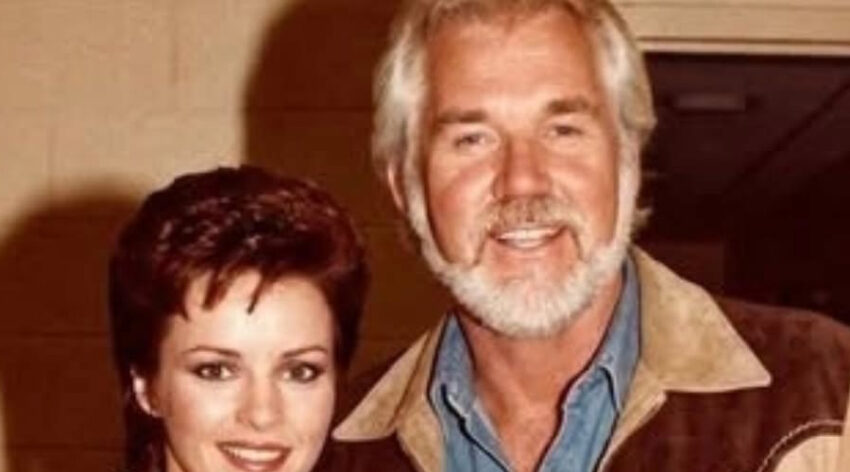
Sheena Easton’s path began in Bellshill, Scotland, and reached television audiences through the BBC documentary The Big Time. Viewers watched an aspiring performer pursue a recording career; soon, “Modern Girl” and “Morning Train (Nine to Five)” helped turn that ambition into international success. Her performance of “For Your Eyes Only,” including an appearance during the James Bond film’s opening titles, gave her another unforgettable showcase. She had become a distinctive presence in an intensely competitive decade.
The March 10, 1983 photograph with Kenny Rogers captures that career at a telling moment. Their recording of “We’ve Got Tonight” brought her voice into country-pop territory, revealing a tenderness that complemented her brighter hits. Rather than abandon her identity, Easton expanded it. With two Grammy Awards among her achievements, her legacy rests on more than eighties nostalgia: it is the story of a Scottish singer whose ambition and adaptability carried her far beyond her beginnings.
The duet put two performers with different experience in front of the same audience. Rogers had spent years recording songs that blend country storytelling with arrangements familiar to pop listeners. Easton was already known for pop hits and for her Bond theme. We’ve Got Tonight gave her a quieter part to sing. Much of the recording’s character comes from how the voices answer each other and build toward the chorus. There is room for both singers’ established styles, which helps explain how the recording reached listeners who followed either one.
Easton’s appearance in the titles of For Your Eyes Only also made her particularly visible at a point when her career was expanding. Viewers who knew her face and voice from the film could encounter her again on the radio in a song that had a different tempo and audience. The photograph with Rogers belongs to that period. Its interest lies partly in how many different settings Easton moved between in a short span of time. Her arrival in country-pop was one of those changes.
Looking back, the picture can feel like a meeting of two different moments in popular music. Rogers was the established country performer, and Easton was a Scottish singer whose recordings had crossed into the American pop market. Recording together gave each a new way to reach that market. Their choice of a ballad emphasizes the contrast between their delivery more than an image alone could show.
The photograph preserves a moment when the work was still new. The career Easton went on to build makes it easier to place the image in context. It catches her after the first pop and film successes and during a period of experimenting with new collaborators. Her Grammy wins and the continuing recognition of the duet reflect the range that the photograph only hints at.
That is why the names behind the image matter. They lead back to a recording that listeners can still hear and to a particular stage in Easton’s career.
The recording also serves as an entry point for listeners who first discovered either artist through a different genre or generation.