
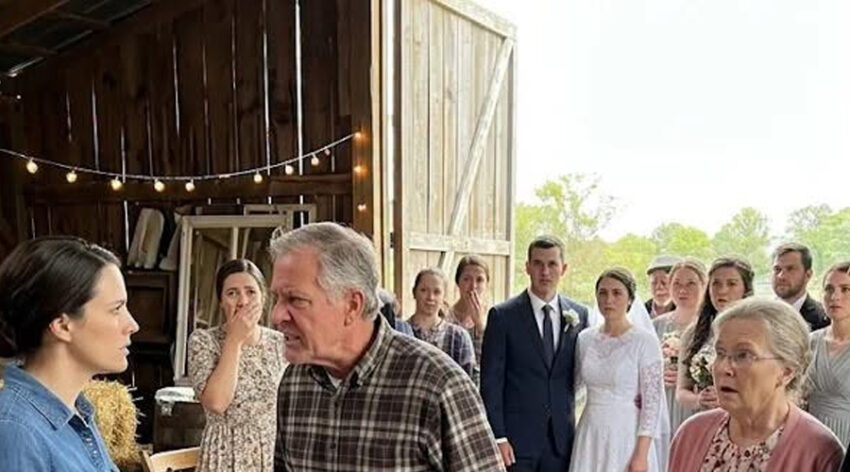
My name is Erica Sodto, and I am 53 years old. Three months after I buried my husband, my mother called.
“Don’t make this difficult,” she said. “Let us use Clint’s barn. Your sister’s family needs it for a big event in August.”
Then my father leaned toward the phone.
“Consider it the first useful thing that farmer ever did for us.”
I stayed quiet for a second. I was still sitting in the same kitchen chair I’d occupied the day he refused to come to the funeral. That day, he’d said, clearly enough for my mother to hear and not correct him, “I’m not wasting gas on some farmer who never made anything of himself.”
Their pew had stayed empty. They lived two hours away.
Now they wanted the barn Clint had spent three winters rebuilding with his own hands.
I stood up.
“Good,” I said. “Then you should know what he left me.”
The line went silent.
Before we go further, if you’re new here, take a second to like and subscribe. It helps more than you know. And drop a comment telling me where you’re watching from and what time it is there. I read every single one.
My father always needed Clint to be small.
To understand why, you have to go back to a county fair in August of 1996 and a ribbon that was never supposed to mean anything.
I was 23 that summer, working on my master’s in library science at the University of Missouri. A friend talked me into volunteering at the Boone County Fair, handing out maps from a folding table near the cattle barns.
I was not a farm girl. I grew up on a cul-de-sac in Kansas, where the only livestock were golden retrievers.
Around noon, the heifer show let out. A tall man in a pressed pearl-snap shirt walked past my table holding a red ribbon. Second place. Behind him, a boy of maybe 14 was crying with joy over a blue one.
The man noticed me watching and stopped.
“That kid fed his heifer better than I fed mine,” he said. “Ribbon’s honest.”
I told him I had never won anything in my life, not even a raffle. I don’t know why I said it. I was not the kind of girl who told strangers things.
He looked down at the ribbon, then back at me, and laid it on top of my stack of maps. The date was printed in gold along the bottom: August 17th, 1996.
“Second place is still a place. You keep it. I’ve got cows to answer to.”
That was Clint Sodto.
He was 27. He smelled like hay and sunscreen, and he walked off before I could tell him my name. He came back the next day to ask for it.
I kept that ribbon pressed inside a book for two years. Then I married the man who gave it to me.
The first time I brought Clint home to Olathe was in the spring of 1997.
My mother set the good table. My father poured himself a bourbon and did not offer Clint one.
My father sold used cars for 30 years and owned his own lot for 20 of them. He believed every person had a sticker price, and he thought it was dishonest to pretend otherwise.
Halfway through the pot roast, he set down his fork.
“What do you clear in a good year, son? Ballpark.”
Clint wiped his mouth before he answered.
“In a good year, sir, I clear the creek and pay my bills on time.”
My father laughed. It was not a kind laugh.
My sister Heather, 19 and home from college, laughed too, because Heather always laughed when Dad did. She was the easy daughter. She never brought anyone home who needed explaining.
My mother asked Clint if he’d like more potatoes.
That was how she ended things. She never corrected my father. She just passed the potatoes.
We were married in June of 1998 in the yard behind Clint’s farmhouse outside Carver Mill, Missouri.
My parents came. They sat in the second row.
During the toasts, Clint stood with a paper cup of sweet tea and pointed down the slope toward the water.
“My grandfather called this the Sodto place. Tonight, I’m planting a tree down there by the creek. So, from now on, that spot’s Willow Creek.”
Everyone laughed and raised their cups. My parents raised theirs too. Then they left before the cake was cut because my father said the drive was long and the gravel was hard on his tires.
That evening, after most of the guests had gone, Clint carried a willow sapling down to the creek and set it in the soft ground by the water.
My parents left before the cake.
Clint planted a tree instead.
In December of 2016, the phone rang a little after ten at night. It was my father, and he was not calling to wish us a merry Christmas.
He and my mother had spent the weekend at the casino in Boonville. On the drive home in sleet, their Buick died on the shoulder of I-70. The dashboard had gone dark. His roadside membership had lapsed in October.
Clint was pulling on his boots before I hung up.
It took him 45 minutes to reach them. He towed the Buick back to our place with a chain behind his pickup, my parents riding in his cab with the heater turned all the way up.
They slept in our guest room.
The next morning, Clint drove into town, bought an alternator, and installed it in our machine shed with fingers so cold he had to stop and blow on them.
The part cost $180.
My father reached for his wallet. Clint waved it away.
“Long as everybody gets home safe, sir. That’s the only bill that matters.”
Three weeks later, at a church Christmas party, I heard my father telling the story to a circle of men from his Sunday school class.
“Motor Club had us home by morning. Best money I ever spent.”
I was standing right there with a cup of punch in my hand.
I didn’t say a word.
That was the first time I let my father erase him. It wasn’t the last.
The barn behind our house was built in 1924 by Clint’s grandfather. By the time I married into the family, the roof sagged and the north wall leaned like a tired man.
In the winter of 2019, Clint decided to save it.
It took him three winters.
Whenever a neighbor tore down an old shed, Clint hauled the good boards home, pulled the nails one at a time, and planed the wood smooth in the machine shed.
On the main crossbeam, where only someone on a ladder would ever see it, he carved C + E, 1998.
Clint was a man who printed everything. Grain prices, weather reports, every single receipt.
“Screens forget,” he liked to say. “Paper doesn’t.”
I teased him about it for years. His office looked like a library with no catalog.
In September of 2022, our neighbor Dwight Harmon’s granddaughter was married in that barn. Dwight was Clint’s oldest friend.
Clint wouldn’t take a dime.
He strung the lights himself, swept the floor twice, and stood at the back during the vows with his hat in his hands.
When I asked why he wouldn’t at least let them pay for the electricity, he shrugged.
“A barn’s for people, Erica. Hay can sit under a tarp. People can’t.”
That Thanksgiving, I showed my parents the wedding pictures on my phone.
My father scrolled through them and handed it back.
“Free? No wonder he’s broke.”
Clint was carving the turkey. He didn’t look up.
And I, God help me, said nothing at all.
In January of 2025, Clint went to the doctor about a backache that wouldn’t quit.
Two weeks later, we sat in a small office in Columbia and heard the words pancreatic cancer.
My mother mailed a card with a printed prayer on the front. My father signed his name under hers.
They never drove out to see him. Not once.
Heather came for Labor Day weekend with her husband Josh and their two kids.
Josh had started an event company that spring, something to do with weddings and parties, and he talked about it through most of the first dinner.
Heather spent a lot of time at my kitchen sink with her back to the room. Twice, I caught her crying.
On Sunday, near sundown, Josh walked out to the barn with a camera hanging from his neck. Clint was resting on the porch.
I watched Josh circle the building, crouching and shooting the low light through the open doors.
When he came back, he leaned on the porch rail.
“How many folks you figure this place could hold? Just curious.”
Clint looked at him for a long moment.
“Depends what they came for.”
Josh laughed and asked whether the barn had enough power for a band.
Clint told him it had enough for a radio.
Monday morning, they packed up and left.
Clint stood in the drive and watched their taillights long after there was anything left to see.
By October, the chemo was taking more than it was giving, and Clint decided he was finished with it.
By Thanksgiving, a hospice nurse was coming to the house three times a week, and a hospital bed stood in the living room where the couch used to be.
He slept most of the day.
When he was awake, he wanted to talk about practical things. Which bank held the operating loan? Which neighbor still had his posthole digger? Where he’d hidden the spare key to the fuel tank?
One afternoon, he took my hand and held it longer than usual.
“Two things,” he said. “Don’t sell the truck right away. Give it till spring.”
“Clint, I don’t care about the truck.”
“Humor me.”
His fingers tightened around mine.
“And don’t let anybody make you small. You hear me? Not anybody.”
I thought he was talking about grief, about the way people would hover over me afterward.
I promised him.
His truck keys hung on the hook by the back door, where they had hung for 27 years. I walked past them every day after that.
I thought he meant the truck needed new tires.
I didn’t ask.
Clint died just before dawn on Monday, December 8th.
He was 57 years old.
I was sitting beside him. The room was quiet except for the hum of the oxygen machine, and then it was quiet except for nothing at all.
I turned the machine off myself.
It felt like the last thing I could do for him.
Outside, the cattle started bawling. They wanted their hay, and they didn’t care what had happened inside the house.
I remember standing at the window in my robe, knowing I had to go feed them and not being able to make my legs move.
Twenty minutes later, Dwight’s pickup came up the lane.
I hadn’t called him. Maybe the hospice nurse had. Maybe he just knew.
He came in without knocking, looked at the bed, and took off his cap.
He didn’t tell me he was sorry.
He said, “I’ll take the chores, Erica. You take today.”
Then he went out and fed the cows.
On the kitchen counter sat the cup of coffee Clint had asked for the morning before and managed only two sips of.
I couldn’t bring myself to pour it out.
By noon, the funeral home had come and gone. By evening, the house had filled with casseroles and neighbors and then emptied again.
There was one call left to make, and I couldn’t make it that night.
I made it the next morning.
I sat down in Clint’s chair at the kitchen table because I couldn’t stand to look at it empty.
My mother answered on the third ring.
When I told her, she made a soft sound and said, “Oh, honey. Here, let me put you on speaker so your daddy can hear.”
I told them the service would be Saturday at our church in Carver Mill. I told them I would save them seats up front.
There was a pause.
Then my father’s voice came through, flat and clear.
“I’m not wasting gas on some farmer who never made anything of himself.”
He said it clearly enough for my mother to hear.
She didn’t correct him. She didn’t say his name in that sharp way wives sometimes do. She let the words sit there between us.
Then she picked up the receiver and took me off speaker.
“What time is the service, sweetheart? Will they livestream it? I’ll tell the ladies at church we watched.”
I gave her the time. I don’t remember anything else I said.
“Blessings, honey,” she said, and hung up.
I sat there for a long time.
Then, because I am a librarian and that is what librarians do when the world stops making sense, I looked something up.
From my parents’ driveway in Olathe to our church was about 145 miles. Round trip, maybe 11 gallons for my father’s Buick.
At that week’s gas prices, about $32.
I wrote “$32” on a yellow sticky note and pressed it to the refrigerator.
I don’t know why. I just didn’t want to forget the price.
Friday evening, the night before the funeral, I carried a wreath out to the barn.
Clint’s mother had taught me to make them the first winter I lived on the farm. Dried wheat woven into a circle, tied with a black ribbon.
She told me you hung one on the barn door when you lost someone, so neighbors driving past would know to slow down.
She had hung one for Clint’s father in 2005.
I’d kept a bundle of that wheat in a box in the hall closet ever since.
It was cold enough to make my fingers ache. I drove a nail into the old door, hung the wreath, and stood in the dark with my flashlight pointed at the gravel.
My phone buzzed in my coat pocket.
It was Heather.
Kaden has a wrestling tournament in Wichita this weekend. I’m so sorry. I love you.
I read it twice.
I typed back that I understood, and I did.
Kaden was 17, and tournaments matter at 17.
It was only that I was 52, my husband was dead, and nobody from my family was coming.
I took the wreath down on Sunday morning and put it back in its box. It hung there for one weekend.
That was the only time it ever did.
The church was full on Saturday.
That surprised me, though it shouldn’t have.
Farmers came in their good coats. The men from the co-op came. The young woman who’d been married in our barn three years earlier sat near the back with a baby on her shoulder.
Dwight was one of the pallbearers.
He found me in the vestibule before the service and squeezed my arm.
“Fed your cows this morning,” he said. “Everything’s quiet out there.”
I thanked him. I believed him.
When I walked up the aisle, I saw the first pew on the right.
Someone at the funeral home had set small white cards along it.
Albright family. Four of them. One each for my mother, my father, my sister, and her husband.
With the whole church at my back, I picked up those cards one at a time and put them in my purse.
Then I sat down in that empty pew by myself.
We sang Clint’s favorite hymns. Dwight’s voice broke on the last verse of the second one, and he kept singing anyway.
That night, alone at home, I opened Facebook for the first time in a week.
My mother had posted a photo of a winter sunset over a parking lot in Olathe.
Thinking of our son-in-law today.
Forty-one people had liked it.
If you’ve ever looked out at a room and counted the empty seats where your family should have been, you’re not alone. Tell me in the comments.
The days after a funeral are made of paperwork.
The hospital bills came in thick envelopes. After insurance, we still owed about $18,000, which turned out to be the out-of-pocket maximum on our plan.
I set up a payment schedule.
I sold two of the heifers Clint had been holding back.
Our lawyer, a soft-spoken man who had handled Clint’s father’s estate, sat with me at the kitchen table and explained the rest.
The farm had been in both our names since 2005.
When Clint died, it simply became mine. No probate, no waiting.
“People are going to tell you to sell,” he said. “Don’t let anyone rush you.”
Nobody needed to rush me.
I wasn’t selling.
Christmas came anyway.
Dwight’s wife wouldn’t hear of me eating alone, so I spent Christmas Eve at their table with their grandchildren crawling underneath it.
It was a kindness.
It was also the hardest night I’d had since the funeral.
When I got home, I made the mistake of looking at my phone.
My mother had posted a picture from their living room. My parents on the couch. Heather and Josh standing behind them. The kids on the floor in matching pajamas.
Everyone smiling.
The caption read, Merry Christmas. All of us together.
“All of us,” the caption said.
I counted.
I wasn’t one of them.
In January, I started putting the farm back together in a way I could manage.
Cole Harmon, Dwight’s son, came by and offered to rent the crop ground for the season, all 180 acres.
He named a price per acre that I later learned was above the county average.
“Dad says I pay you fair or I don’t farm it at all,” he told me.
I kept the cattle. Dwight promised to help with calving.
I went back to the library three days a week because I needed the paycheck and because I needed somewhere to be that wasn’t that house.
In the evenings, I sat in Clint’s office and learned how he had run things.
He really had printed everything.
Binders of grain contracts, folders of receipts going back 20 years.
In a folder marked 2016, I found a receipt from the parts store in Carver Mill.
One alternator, $180.
Across the top, in Clint’s square handwriting, he’d written:
W. A. Buick. Don’t mention it.
He never had. Not once.
Not even when my father lied about it in front of me.
Clint printed everything.
I should have remembered that sooner.
On the first Saturday in February, a silver Honda came up our lane and stopped beside the barn.
I watched from the kitchen window as a young couple climbed out. She wore a knit hat with a pompom. He had his hands jammed in his coat pockets.
They walked slowly around the barn, the way people walk around a house they’re thinking of buying.
I put on my coat and went out.
“Can I help you?”
The girl turned, flushed with embarrassment.
“Oh, hi. I’m so sorry. Is this Willow Creek Barn? I’m Paige, and this is Grant. Our walkthrough isn’t until next month, but we were driving back from Columbia, and we couldn’t wait to see it.”
“This is the Sodto farm. It isn’t a venue.”
They looked at each other.
Grant took out his phone and turned the screen toward me.
There was my barn, golden at sundown, its doors thrown open, strings of white lights hanging from the rafters.
I had never hung a single light in that barn.
“We put our deposit down in December,” Paige said. “The coordinator said the owners are family. She told us we had nothing to worry about.”
I told them as gently as I could that there had to be some mistake.
Grant’s jaw tightened. Paige’s eyes filled with tears.
They apologized for bothering me and got back into the Honda.
And I stood in the cold and watched them go.
Family, she’d said.
I didn’t have any family left who would call this place theirs.
Or so I thought.
That night, I did what I have done my whole working life.
I went looking.
It took me less than ten minutes.
Willow Creek Barn was listed on two of the big wedding websites.
Rustic elegance in the heart of mid-Missouri. Room for up to 180 guests. Weekends available summer through fall.
The photos were of our barn.
Most of them had been taken over Labor Day weekend. I recognized the angle of the sun and the porch rail where Josh had leaned.
Someone had edited in the lights and a long farm table piled with flowers.
At the bottom of the page were the words Managed by KEC Events, a contact form, and a phone number.
The area code was 913.
Half of Kansas City has a 913 number. Half of Johnson County, Kansas, does.
So did my parents.
I told myself it meant nothing.
People steal photos off the internet every day. This could be any scam, run by anyone from anywhere.
But the name kept bothering me.
Willow Creek.
Clint had said it exactly once in front of an audience, at our wedding, with a paper cup in his hand.
The only people who heard it were the ones standing in that yard.
A few old friends. Dwight. My parents. My sister.
I filled out the report forms on both websites.
I wrote that I owned the property, that I had never authorized any listing, and that my husband had recently died.
I attached a photo of the deed.
An automated email came back within the minute.
Thank you for your report. Listings are reviewed within 10 business days.
I printed the listing. Then I printed the automated reply.
I put both into a folder on Clint’s desk.
I was beginning to understand why he did that.
A week later, the listing was still there.
On Sunday afternoon, I called my sister.
We hadn’t spoken since her text about the wrestling tournament.
I asked about the kids. She asked how I was holding up, the way people ask when they’re hoping you’ll say fine.
“I’m fine,” I told her. “Heather, can I ask you something strange? Have you ever heard of a company called KEC?”
The silence lasted one breath too long.
“KEC? No. Why would I? Erica, I have to go. Laney’s calling me.”
The line went dead.
I sat there holding the phone.
Laney was 14. She hadn’t needed her mother to come running since she was about six years old.
I told myself a lot of things that afternoon.
That Heather was distracted. That I was grieving and seeing shadows in every corner. That my little sister, who used to crawl into my bed during thunderstorms, would never be part of something like this.
I wanted to believe every one of them.
I’d known my sister for 48 years.
She had never once hung up on me that fast.
The first Saturday in March was the first warm day of the year.
The snow had pulled back to the fence lines, and the air smelled like mud and thaw.
It was spring, or close enough.
Clint had asked me to give it till spring, and I had.
I’d driven his truck all winter, hauling hay and feed sacks, but it was more truck than I needed, and the hospital bills weren’t going anywhere.
I decided it was time to sell.
I pulled it into the machine shed and started cleaning it out.
Gas receipts. A pair of work gloves. A tin of the mints his doctor had told him to quit.
When I lifted the rear bench seat to check the storage well underneath, I found a manila folder.
On the front, in his square handwriting, were the words:
For E. When they come.
Inside was a printout of the Willow Creek Barn listing.
The same photos I had found.
But in the top corner, where the printer stamps the date, it said November 18th, 2025.
November 18th.
Clint was still alive then.
He was still walking to the mailbox on his own.
Behind it was a printed text message from a number I didn’t recognize.
Look at this before it’s too late. Please don’t tell Erica it came from me. I’m sorry.
And a sheet of yellow legal paper with two lines in his handwriting.
Called J November 20th. Gave till December 1st. Memo on my phone. You know the date.
His phone was in my nightstand drawer, its battery long dead.
I charged it and tried our wedding anniversary.
Wrong.
His birthday.
Wrong.
Mine.
Wrong again.
The screen made me wait a minute before I could try again, and I set the phone down as if it might bite.
If I kept guessing, I was afraid it would lock me out for good.
I decided to keep the truck.
Then I sat in the cab of it for a long time with the folder open on my lap.
He knew.
While I was counting out his pills, he knew.
On Saturday, the 14th of March, exactly three months after the funeral, I was sitting at the kitchen table with that folder in front of me.
In Clint’s chair.
I had been sitting in it more and more.
For a week, I’d read and reread every page. I had tried two more passcodes on his phone and lost my nerve both times. I had picked up the phone to call my sister and put it down again.
I was waiting, though I couldn’t have told you for what.
Then my cell phone lit up with my mother’s name.
She hadn’t called since December.
Not on Christmas. Not on my birthday in January.
I let it ring three times before I answered.
“Erica, honey.”
Her voice was warm, the voice she used on the phone with women from church.
“How are you holding up out there?”
I told her I was managing.
“Your daddy’s right here with me. I’ve got you on speaker.”
A pause.
“We’ve been giving you space, sweetheart. Your daddy and I thought you needed time.”
Space.
Three months of it.
I looked down at the printout, at the date stamped in the corner, and said nothing.
She talked about the weather in Olathe. She talked about Kaden’s grades and Laney’s braces. She asked whether the roads out by me were still muddy.
My mother never started with the thing she actually wanted. She warmed it up first, like a car on a cold morning.
I knew that about her.
I had known it all my life.
Then she got to the reason she’d called.
“So Heather and Josh have some wonderful news,” she said. “You know Josh started his company last year. Well, it’s really taking off. They’ve got their very first big wedding coming up on August 1st. A hundred and sixty guests, vendors, a photographer, even a girl who writes one of those bridal blogs. It’s a big deal for them, Erica. It could make the whole business.”
“That’s nice,” I said.
“The thing is, the couples have to make their second payments by April 1st, and the caterers and the rental people won’t take deposits until the venue is confirmed in writing. So we need to get everything settled this week, if we can.”
I kept my voice level.
“What’s the name of Josh’s company, Mom?”
“Oh, it’s cute. Kesler Event Company. They call it KEC. Heather picked out the colors herself. A sort of sage green.”
KEC.
I looked at the phone number at the bottom of the printout.
The 913 area code.
I looked at the yellow sheet in Clint’s handwriting.
Called J.
Not Jim from the co-op.
Not John at the bank.
J for Josh.
I looked at the front of the folder.
For E. When they come.
I had read those words a hundred times that week.
I had pictured strangers, scammers somewhere far away, faceless people who stole pictures off the internet and would someday show up at my door with paperwork.
My mother was still talking. Something about how lovely the barn would look with lanterns.
When they come.
Clint hadn’t meant strangers.
He’d meant them.
“Mom,” I said, “why would they need my barn?”
There was a short pause, the kind that comes when someone realizes they’ve skipped a step.
“Don’t make this difficult,” she said. “Let us use Clint’s barn. Your sister’s family needs it for a big event in August.”
Then my father leaned toward the speaker.
I could hear the creak of his recliner.
“Consider it the first useful thing that farmer ever did for us.”
I stayed quiet for a second.
Three months earlier, in this same chair, I had listened to that same voice tell me my husband wasn’t worth $32 in gas.
I stood up.
“Good,” I said. “Then you should know what he left me.”
The line went silent.
I could hear the television murmuring somewhere in their living room. I could hear my mother breathing.
My father found his voice first.
“What’s that supposed to mean?”
I could have told him.
I had the folder open in front of me. I could have read him the date in the corner of that printout and listened to him try to explain it.
But I didn’t know everything yet.
There was a voice memo on a phone I couldn’t open and a message from someone who had asked not to be named.
My whole life, I had walked into conversations with my father holding half of what I needed.
I wasn’t going to do it again.
“You’ll find out,” I said. “Goodbye, Dad.”
I ended the call.
Then I stood in my kitchen with the phone in my hand and my heart pounding like I had run up the lane.
I hung up first.
In 53 years, I had never hung up first.
The phone started buzzing within the hour, and it didn’t stop.
Heather texted first.
What did Clint leave you? Mom is crying. Dad’s furious. What is going on?
Then a second message appeared under it.
I watched the three dots blink for a long time.
Then the bubble vanished, and a gray line took its place.
This message was deleted.
I stared at that line longer than I’d stared at anything all day.
Josh called at six.
I let it ring.
He called again at six-thirty and again at seven.
The third time, he left a voicemail.
I listened to it standing at the kitchen sink with my hands still wet from the dishes.
“Erica, it’s Josh. Hey, look, I think there’s been a misunderstanding. Sherry may not have explained things right. I’d like to sit down and walk you through it. Let’s talk like adults. Business to business.”
Business to business.
Three months earlier, I had buried my husband.
This man had not come to the funeral, had not sent a card, had not called.
Now he wanted to talk to me like I was a vendor.
I played the message again.
On the second listen, I noticed what wasn’t in it.
He didn’t ask what I meant about Clint leaving me something.
He didn’t sound confused.
He sounded like a man trying to get ahead of something.
My mother called twice more.
I didn’t answer.
My father didn’t call at all, which was its own kind of answer.
My father never chased anyone. He waited for them to come back to him, and they always did.
I went to bed early and didn’t sleep.
I lay in the dark doing what I’d done the whole week, turning the same pieces over and over.
A listing my husband had printed in November. A text from someone who loved me enough to warn him and was too afraid to sign her name. A company whose phone number had my parents’ area code.
And now a sister who had started to ask me something and then taken it back.
Near midnight, I picked up my phone and looked at that gray line one more time.
What had my sister started to ask me?
And why had she taken it back?
On Sunday morning, I fed the cattle myself and then walked out to the barn.
It was cold inside.
The light came through the gaps in the siding in thin gold stripes, and the floor still smelled faintly of the hay Clint had stored there his last fall.
I sat down on an overturned feed bucket and let myself think the thought I had been avoiding.
It would be easier to say yes.
That was the truth.
That was what the old me would have done.
Let them have the barn for one wedding. Smooth it over. Make the phone stop ringing.
My mother would call me sweetheart again.
My father would go back to ignoring me in the comfortable way he always had.
Heather and I would talk about the kids.
Everyone would pretend.
I had been pretending for 53 years.
I was very good at it.
I looked up at the crossbeam.
C + E. 1998.
Clint had carved it with a pocketknife while standing on a ladder, in a place where nobody would ever see it but the two of us.
He hadn’t done it for anyone else.
He’d done it because it was true.
Don’t let anybody make you small. You hear me? Not anybody.
I sat there until my feet went numb.
Then I stood up, and I knew the answer was no.
Not because I had a plan.
I didn’t have one yet.
But because saying yes would have meant agreeing with my father.
And I was done agreeing with my father about my husband.
My phone buzzed in my coat pocket as I walked back to the house.
It was Josh.
I’ll be out Monday at 10:00. Bringing paperwork. You’ll like the numbers.
He thought I could be bought.
He was about to tell me exactly how much he had already spent.
Josh’s truck came up the lane at ten sharp on Monday morning.
It’s a two-hour-and-twenty-minute drive from Olathe. He must have left before eight.
He came in smiling, a leather folio under his arm, and hugged me in the doorway like we were close.
I let him.
I wanted to see what he’d brought.
At the kitchen table, he slid a stapled document across to me.
Venue Partnership Agreement.
My name was already typed on the signature line.
“Here’s the deal,” he said. “KEC handles everything. Bookings, setup, cleanup, insurance. You don’t lift a finger. You get 20% of every venue fee. Six weddings already on the calendar, August through October. That’s real money, Erica.”
“Six weddings?” I said.
“Six already deposited. $31,500 in the account.”
He tapped the page.
“And that’s year one. Once the word gets out, we’ll book every weekend from May to November.”
“When did you start taking deposits?”
He didn’t miss a beat.
“Over the winter. Once things settled down.”
Once things settled down.
I thought of the printout in the folder, the date in the corner.
I thought of November, when Clint could still walk to the mailbox.
I didn’t say anything about it.
I turned the page instead.
“Twenty percent for doing nothing,” Josh said.
He leaned back in his chair.
“Erica, I’m going to be honest with you. Clint never made that kind of money off this place. Not in a good year.”
I set the agreement down.
“How much of the deposit money is left?”
For the first time since he’d walked in, Josh hesitated.
He looked at his folio. He looked out the window at the barn.
Then he folded his hands on the table, and his voice dropped into something he probably thought sounded reasonable.
“Look, you start a business, you have to invest. We bought a tent, a big one, 200 chairs, lighting, generators, a trailer to haul it all. That’s about $22,000 right there. It’s all sitting in a storage unit in Olathe, ready to go. So there’s about $9,000 left, give or take.”
He leaned forward.
“And here’s the other thing you should know. Your dad’s in on this. He put up $40,000 last spring to get the company off the ground. That’s a big chunk of his retirement, Erica.”
There it was.
Consider it the first useful thing that farmer ever did for us.
I had heard it as an insult.
It was an invoice.
“You want him to lose his retirement over your feelings?” Josh asked.
“I want you to take my barn off your website.”
His face changed.
The smile went first. Then the friendly slump in his shoulders.
What was left underneath was harder and younger and more frightened than I expected.
“You don’t understand how this works. Those couples paid. They’ve sent out save-the-dates. They’ve booked flights.”
He stood up and shoved the agreement back into his folio.
“Fine. You don’t want to sign? Then you call six brides and tell them why.”
He left without closing the door behind him.
His tires threw gravel against the side of the house all the way down the lane.
I sat at the table for a long time afterward.
Six brides.
Six women who’d done nothing wrong.
And my family had made them my problem.
The following Saturday, a little blue hatchback pulled into the yard at noon.
I hadn’t known anyone was coming until that morning, when a text arrived from a number I didn’t recognize.
Hi, this is Molly Hrix. Josh said the owner would show us around today. See you at noon. So excited!
Josh had scheduled that walkthrough in February.
He hadn’t canceled it.
He had sent her to me on purpose.
Molly was 27, an emergency room nurse in Columbia with the tired eyes of someone who’d come straight off a night shift.
Her mother, Donna, climbed out of the passenger side holding a canvas tote bag.
Inside it, I would learn, were fabric swatches.
Donna was sewing Molly’s wedding dress herself.
I could have lied to them.
It would have been easy.
Smile, walk them around, tell them everything was fine, and figure it out later.
Instead, I walked them around and kept my mouth shut until I knew what I wanted to say.
Molly talked the whole time.
She told me she’d been saving for three years. She’d worked every Christmas and every Fourth of July because holiday shifts paid double.
She showed me the spreadsheet on her phone where she tracked every dollar.
The $6,000 package was the biggest single check she had ever written.
Down by the creek, she stopped under the willow.
In March, it was nothing but bare yellow branches hanging over the water.
“This is where I’d stand,” she said softly. “Right here. Mom, look.”
Donna looked.
So did I.
When we got back to the cars, I asked Molly if she’d mind waiting a moment.
“There’s a problem with your booking,” I said. “I’m not going to pretend there isn’t. I can’t explain all of it yet because I don’t have all of it yet. But I need you to give me two weeks.”
Her face went white.
“Is my wedding still happening? I’ve worked every holiday for three years to pay for this,” she said before I could answer.
Her voice cracked.
“Please tell me it’s still happening.”
Donna put an arm around her daughter’s shoulders.
“I can’t promise you that today,” I said. “But I can promise you this. I will not leave you stranded. Whatever happens, you will not be left standing in a field with nowhere to go.”
Molly nodded.
She didn’t believe me.
I wouldn’t have either.
I promised a stranger I wouldn’t leave her stranded.
I didn’t know yet how I’d keep it.
On Sunday after church, Dwight and I went to the diner on Main Street the way we sometimes did.
He ordered the same thing he had ordered for 40 years.
I ordered coffee and didn’t drink it.
He was quiet for a while, stirring his cup.
Then he asked something that seemed to have been on his mind.
“Did Heather ever send you that video?”
“What video?”
“The memorial one for Clint.”
He looked up.
“I figured it was a surprise, so I never brought it up, but it’s been three months.”
“Dwight, I don’t know what you’re talking about.”
He put down his spoon.
“Morning of the funeral,” he said slowly. “I came over to feed your cows. Must have been seven-thirty, still frosty. And there’s Josh’s truck parked out by your barn, and Josh standing in the yard with one of those drones up in the air, buzzing around the roof.”
My hands went cold around the cup.
“I asked him what he was doing. He said Heather was putting together a tribute video, a surprise for you, something for later. He asked me not to say anything.”
Dwight’s voice dropped.
“He said it was a surprise. Said not to spoil it for you.”
He watched my face change.
I watched his.
“Erica.”
He sounded much older all of a sudden.
“There’s no video, is there?”
Fed your cows this morning. Everything’s quiet out there.
He had said it to me in the church vestibule an hour later, with his hand on my arm.
He’d meant it.
He’d believed it.
Dwight’s coffee sat untouched in front of him.
I watched the steam stop rising.
There was no video.
Not for me.
That night, I opened the KEC Events website and clicked on the barn.
There was a short video at the top of the page, one I hadn’t watched before.
A soft piano track played under it.
The camera rose slowly over the trees, swung across the frozen pasture, and drifted down toward the front of the barn.
The trees were bare. Frost silvered the fence rails.
The light was the flat, pale light of a December morning.
And on the barn door, as the camera floated closer, hung a circle of dried wheat tied with a black ribbon.
I paused the video.
I leaned so close to the screen that my breath fogged it.
I had hung that wreath on Friday night, the 12th of December.
I had taken it down on Sunday morning, the 14th.
For one weekend in its entire history, that wreath had hung on that door.
Dwight had seen Josh flying the drone on Saturday morning.
The morning of the funeral.
While I was in town, choosing which suit to bury my husband in, my sister’s husband was flying a camera over his barn.
While the church was filling up, while Dwight was pulling on his good jacket, Josh was getting his shots.
He had probably driven back to Kansas before the hymn started.
I sat there with the video frozen on the screen, the wreath at the center of the frame.
They’d filmed his barn while we were singing his hymns.
I saved the video.
I took screenshots of every frame that showed the door.
I printed them the way Clint would have.
That wreath hung on that door for one weekend in the life of that barn.
Now I could prove which one.
On Tuesday, my mother posted something on Facebook.
She didn’t use my name.
She didn’t have to.
Some people let grief make them bitter. Praying for a sweet bride whose big day is being held hostage by someone in our own family. Prayers appreciated.
Within an hour, there were 30 comments.
Cousins I hadn’t seen in a decade. Women from her church. My father’s old business partner.
So sorry, Sherry.
Some people never change.
Praying for your family.
One of my aunts sent me a private message that just said, Your mother is heartbroken. Please call her.
I read every single comment.
I don’t know why.
Maybe I needed to know exactly how far it had gone.
Then I did something I had done a thousand times before.
I opened a text to my mother.
I typed, I’m sorry, Mom.
My thumb hovered over the send button.
It was such a familiar shape, that sentence.
I had been sending it my whole life.
I’m sorry I brought home a farmer.
I’m sorry I made Dad uncomfortable.
I’m sorry I moved so far.
I’m sorry you’re upset.
I’m sorry.
I’m sorry.
I’m sorry.
I deleted it one letter at a time.
Don’t let anybody make you small.
I put the phone face down on the table.
I looked at the folder, at the yellow sheet in Clint’s handwriting.
Memo on my phone. You know the date.
If I was going to stop being small, I needed to hear what Clint had to say first.
Have you ever been called the bitter one just for refusing to be used? I’d like to hear your story.
You know the date.
On Thursday night, I sat on the edge of our bed with his phone in my hand and tried to think like Clint.
Not our wedding. I’d tried that.
Not birthdays. He wasn’t sentimental about birthdays. He thought they were an excuse for cake.
I thought about the things he did keep.
The binders. The receipts. A hat from the co-op that he wore until the brim fell apart.
I got up and opened his top dresser drawer.
His socks were still in there, rolled in pairs the way he liked them.
I hadn’t been able to touch them yet.
Underneath the socks, flat against the bottom of the drawer, was a red ribbon.
Second place.
The gold letters had faded, but I could still read them.
August 17th, 1996.
I hadn’t seen it since the year we married.
Somewhere along the way, it had slipped out of my book, and I’d assumed it was lost.
He’d had it all this time, under his socks, where he’d see it every single morning.
He’d kept a second-place ribbon in his sock drawer for more than 25 years.
I sat down on the floor with the ribbon in one hand and the phone in the other.
And I typed in six numbers.
081796.
The screen opened.
His home screen was a picture of me laughing at something on our back porch.
I didn’t remember him taking it.
I opened the voice memos.
There was only one.
For E.
Recorded December 2nd, six days before he died.
Four minutes and 12 seconds.
I pressed play.
“Hey, Erica.”
His voice was thinner than I remembered, rough at the edges. I could hear the oxygen hissing in the background.
“If you’re hearing this, then they came. I figured they would.”
He stopped to breathe.
“Back in November, somebody sent me a text, a link to a wedding website with our barn on it. Willow Creek Barn. Whoever sent it asked me not to tell you who they were. All I’ll say is, it’s someone who loves you. When you’re ready, you’ll figure it out.”
I closed my eyes.
“I’ll be honest. I had a feeling about Josh since Labor Day. The way he walked around that barn like he was measuring it. So on the 20th, I called him. He didn’t even try to deny it. Said it was just a placeholder, just to see if there was interest. Said your dad had $40,000 in that company. And wasn’t it nice that family could help family?”
He coughed.
It went on for a while.
I waited through it the way I’d waited through so many of them in those last weeks.
My hands clenched in my lap.
“I told Josh no. I gave him till December 1st to take it down. Today’s the 2nd. It’s still up.”
A long pause.
The oxygen hissed.
“I know you’re going to be mad I didn’t tell you. You’d have had every right. But Erica, I’ve got a few weeks left. Maybe. I didn’t want them to be about your father. I wanted them to be about us. That’s selfish, I guess. I’m sorry.”
I was angry.
I want to be honest about that.
I sat on the floor of our bedroom, and I was furious with him.
He had known.
He had carried it alone while I sat beside his bed every night.
He had decided for both of us.
Then his voice changed.
“So here’s what I need you to do. When they come, and they will, call the couples first. They’re the only innocent ones in this. Do the right thing, not the satisfying one. And don’t let them make you the villain.”
A breath.
“You never were.”
The recording ended.
The screen went back to the picture of me laughing on the porch.
The anger didn’t go away.
But underneath it, something else came up, something that had been waiting there all along.
He hadn’t hidden it to protect them.
He’d hidden it to protect the time we had left.
He’d known I would spend those weeks on the phone fighting with my family, and he had wanted me with him instead.
He had chosen us.
Even then.
I played it three times.
Then I got up and did what he asked.
Finding the couples was the easiest research I have ever done.
People who book wedding venues post about it. They post engagement photos and countdowns and screenshots of their save-the-dates.
On Friday morning, I searched the hashtag Willow Creek Barn and found all six couples before my coffee went cold.
Each of them had tagged KEC Events.
I called Molly first.
I had made her a promise.
I told her everything I could prove.
The listing printed in November. The barn that had never been for rent. The man who’d taken her money for a place he had no right to offer.
I didn’t use the word fraud.
I didn’t need to.
She was quiet for a long time.
Then she asked, in her careful nurse’s voice, what I needed from her.
“Everything they ever sent you,” I said. “Every email, every text, every receipt.”
That night, her emails started arriving in my inbox.
I sat at Clint’s desk and read them one by one.
Most were from Josh.
Contracts, payment links, a cheerful list of what was included in the package.
Then I opened one dated December 15th.
It was signed Sher A., Client Coordinator, KEC Events.
Dear Molly,
Thank you so much for your sweet note. I want to put your mind at ease. Our family owns the property, and the barn is ours to use. You have nothing to worry about.
Blessings, Sherry.
Blessings.
She’d said it to me on the phone the morning after Clint died.
“Blessings, honey.”
Then she’d hung up and gone back to her life.
December 15th.
Two days after the funeral.
Two days after an empty pew with four white cards on it.
Over the next week, I spoke with the other five couples, Paige and Grant among them.
Some cried.
One groom yelled, then apologized.
Every one of them sent me what they had.
I printed all of it.
At one point, I sat with the phone in my hand, ready to call the county sheriff.
Then I heard Clint’s voice.
Call the couples first.
A report would sit in a folder on someone’s desk for months.
Six couples standing together demanding their money back would not sit anywhere.
I set the phone down.
Two days.
She couldn’t drive to his funeral.
But two days later, she was selling his barn.
On Monday, the 6th of April, I sent one message to the family group chat.
The one with my parents, Heather, and Josh.
The one nobody had used since Christmas.
Come out to the farm Saturday, April 18th, at 2 p.m. Let’s settle August in person.
Josh replied within a minute.
Knew you’d come around. See you Saturday.
Then my father.
About time.
He didn’t ask how I was.
He never did.
I made a second list.
Four of the six couples could come that Saturday.
Molly and Nate. Paige and Grant. Two others who lived close enough to drive.
I asked Donna to come with Molly.
I asked Dwight, who didn’t let me finish the question.
Then I sat down at Clint’s desk and prepared the way he would have.
I printed the listing with its November date.
I printed the screenshots of the wreath.
I printed Sherry’s email with her signature at the bottom.
I printed the text message from the number I still hadn’t traced, even though by then I was fairly sure I knew who it belonged to.
I put everything in order inside Clint’s folder until it was thick enough that the cover wouldn’t lie flat.
I took the yellow sticky note off the refrigerator.
$32.
I’d looked at it every morning for four months.
I went to the bank in Carver Mill, withdrew $32 in cash, and put it in a plain white envelope.
On Friday night, the 17th, I walked down to the creek and sat under the willow.
It had started to bud.
The branches that had been bare yellow in March were covered in tiny green points now, so small you could barely see them in the dark.
Spring had come whether I was ready or not.
I thought about my parents in their living room in Olathe, satisfied, already planning what they’d say when I gave in.
I thought about the drive they’d make in the morning.
145 miles.
Eleven gallons.
About $32.
For the first time, my parents were going to drive two hours for Clint.
They just didn’t know it yet.
They arrived at two on the dot.
My father’s Buick came first, the same one Clint had towed off I-70 nearly ten years earlier.
My mother got out holding a casserole dish wrapped in a dish towel, as if she were coming to a church supper.
Josh and Heather pulled in behind them in Josh’s truck.
Heather stayed in the passenger seat for a long moment before she opened her door.
I met them in the yard.
“You found the gas money,” I said.
My father’s eyes narrowed.
“Don’t start.”
I led them to the barn.
I’d swept the floor and pulled two hay bales together with a sheet of plywood on top to make a table.
Josh set his folio on it and slid the agreement across, a pen already uncapped beside it.
“Same deal we talked about,” he said. “Twenty percent. Sign here and here, and we’re done.”
My mother set her casserole on the corner of a bale.
“Isn’t this nice? All of us together.”
My father didn’t sit.
He stood with his hands in his jacket pockets, looking around the barn like a man appraising a car he didn’t think much of.
“Sign it, Erica,” he said. “Consider it the first useful thing that farmer—”
“I heard you the first time.”
The barn went quiet.
My father blinked.
In 53 years, I had never interrupted him.
I didn’t pick up the pen.
I walked to the side door of the barn, the one that opened toward the house, and I opened it.
Molly came in first, holding Nate’s hand.
Donna was right behind them, then Paige and Grant, and the two other couples.
And finally Dwight, who took off his cap as he stepped inside and stood against the far wall with his arms folded.
For a moment, nobody spoke.
Josh had gone the color of the plywood.
My mother looked from face to face, confused and smiling politely, until I introduced them one at a time.
When I said Molly’s name, my mother’s smile faltered.
She had written that name at the top of an email.
“These are four of the six couples who paid KEC to get married in this barn,” I said. “I thought they deserved to be here.”
My father turned to me.
“What is this?”
I opened Clint’s folder and laid the first sheet on the plywood.
“This is your listing for Willow Creek Barn. Look at the top corner. That’s the date it was printed. November 18th.”
I let them look.
“This was on your website while Clint was still alive.”
Josh started to speak.
My father beat him to it.
He didn’t look ashamed.
He looked irritated, as if I were making a fuss over something obvious.
“Somebody had to plan ahead,” he said. “He was dying, Erica. Everybody knew it.”
The words just hung there in the barn Clint had rebuilt with his hands.
Grant said something under his breath.
Paige reached for his arm.
Molly stared at my father as if he had slapped her.
And Donna, standing beside her daughter in her church cardigan, said very quietly what everyone in that barn was thinking.
“Lord have mercy.”
Josh put both hands flat on the plywood.
“Okay, everybody take a breath. Erica’s upset, and I understand why, but this isn’t what it looks like.”
He turned toward the couples, using his salesman’s voice.
“Clint and I talked about this last fall. Clint was fine with it. He told me himself. He said, ‘Go ahead. Just don’t bother Erica with it while I’m sick.’”
It was a good lie.
He had probably practiced it in the truck on the way here.
I reached into my coat pocket and took out Clint’s phone and a small Bluetooth speaker.
I set the speaker on the hay bale.
I didn’t say anything.
I just pressed play.
Clint’s voice filled the barn.
It was thin and rough, and the oxygen hissed behind every word.
It echoed a little off the old boards he had planed by hand.
“I told Josh no. I gave him till December 1st to take it down. Today’s the 2nd. It’s still up.”
Nobody moved.
I let the recording run until his voice told me to call the couples first.
Then I stopped it.
Josh stared at the speaker as if it might keep talking.
“That was recorded six days before he died,” I said. “He knew what you did, Josh. He called you. He told you no. And you waited for him to die.”
My sister made a sound I will never forget.
She pressed her hand over her mouth and turned toward the wall.
My mother recovered first.
She always did.
“Now, honey, I don’t know anything about any phone calls.”
She set her hand on her chest.
“And that business with the drone, that was Josh. Your father and I had nothing to do with that.”
I hadn’t said a word about a drone.
I laid the next sheets on the plywood.
Screenshots from the KEC website.
The bare trees. The frost. The barn door.
And the wreath with its black ribbon.
“I hung this wreath on the night of December 12th,” I said. “I took it down on the morning of the 14th. This video was filmed on the 13th, the day of Clint’s funeral.”
Dwight pushed himself off the wall.
“I was standing right there, Josh,” he said. “Right out in that yard. You told me it was a memorial.”
Josh didn’t answer him.
“I didn’t know anything about it,” my mother said again, more firmly. “I’m not part of the business side.”
I looked at Molly.
I had asked her ahead of time whether she’d be willing.
She stepped forward, unfolded a printed email, and read it aloud in a clear, steady voice.
“Dear Molly, thank you so much for your sweet note. I want to put your mind at ease. Our family owns the property, and the barn is ours to use. You have nothing to worry about. Blessings, Sherry.”
She lowered the paper.
“It’s dated December 15th,” Molly said. “It’s signed ‘Client Coordinator.’”
My mother’s face went slack.
She opened her mouth.
“I was only helping my daughter.”
No one answered her.
My mother had nothing left to say.
For once, I let the silence stay.
There was one sheet left in the folder.
I placed it in the middle of the plywood.
A printed text message from a number nobody in that barn would have recognized.
Look at this before it’s too late. Please don’t tell Erica it came from me. I’m sorry.
I didn’t say anything.
I didn’t need to.
I watched my sister look down at it.
Heather’s shoulders started to shake.
She took a breath, then another.
When she finally spoke, it was to the floor.
“I sent that.”
My father turned.
“You what?”
“I sent it.”
She lifted her head, tears running freely now.
“I found the listing on Josh’s laptop in November. I told Josh it was wrong. I told you it was wrong, Dad. And you told me to stay out of it. I couldn’t stop them.”
She looked at me.
“So I told Clint. I used an app so it wouldn’t be my number. I was a coward about it. I know that. But I told him.”
Josh stared at his wife as though he had never seen her before.
My father’s face went dark red.
“After everything this family has done for you—”
“He was the only one who ever told you no, Dad.”
Heather’s voice broke on it.
“The only one. And you hated him for it.”
My father’s mouth closed.
For as long as I can remember, the three of them had stood on one side of every argument, and I’d stood alone on the other.
Now my father stood with his hands in his pockets.
My mother sat frozen by her casserole.
Josh stared at the floor.
And my sister had moved two steps closer to me.
“This is how it’s going to go,” I said.
My voice was calm.
I had practiced that too, under the willow the night before.
“KEC will never hold an event on this property. Not this year. Not ever. The listings come down today.”
Josh nodded without looking up.
Grant stepped forward.
“And every couple gets their deposit back in full within 30 days.”
He looked straight at Josh.
“If we don’t, all six of us are filing suit and sending a complaint to the Kansas Attorney General together.”
“The money’s spent,” my father snapped. “Josh already told you.”
“Then you’ll find a way,” I said.
I turned to the couples.
“Clint used to say a barn’s for people. He meant it. He let our neighbor’s granddaughter get married here and wouldn’t take a dime for it. So if any of you still want to be married in this barn on the date you chose, you can be. No charge. No company. Just neighbors in a barn.”
Molly started crying again.
Donna put her arm around her.
Then I faced my father.
“You said he never made anything of himself.”
I gestured around us at the beams, the floor, the crossbeam with our initials, the open doors with the willow down by the creek beyond them.
“Look around you. Every picture you sold, he made.”
My father didn’t answer.
I don’t think he could.
I took the white envelope out of my coat pocket and held it out to him.
“What’s this?”
“Thirty-two dollars. Gas money.”
I pressed it into his hand.
“Clint always wanted people to get home safe.”
He stood there holding it.
Then he turned and walked out of the barn.
My mother picked up her casserole and followed him without a word.
Josh went after them.
Heather stayed where she was until Josh honked, and then she went too, looking back at me twice before she reached the truck.
I watched their taillights the way Clint once watched Josh’s.
I didn’t wait for them to disappear.
The money came back slowly at first, and then all at once.
By the 24th of April, Josh had refunded the $9,500 still sitting in the KEC account, split among the six couples.
By the end of the month, the Willow Creek Barn listings were gone, and so was the KEC website.
Where it used to be, there was just a gray page that said the domain was no longer active.
That left $22,000 still owed.
Josh didn’t have it.
The tent and the chairs and the generators sold for a fraction of what he had paid.
Two of the brides had already left reviews of KEC on every site they could find.
Donna, it turned out, was in a Facebook group with half the women in my mother’s church.
My father paid the rest.
He wired $22,000 from his savings.
I imagine it was the only way he could keep his name out of a courtroom and his face in the same pew every Sunday.
By the 8th of May, ten days before the deadline, every couple had their money back.
Every dollar.
Molly texted me that afternoon.
Refund came through. Every cent. Thank you for keeping your promise.
I sat on the porch and read it three times.
$40,000 invested in Josh’s company.
$22,000 more to cover the refunds.
$62,000, give or take, and nothing to show for it but a storage unit someone else now rented.
My father finally learned what $40,000 buys when it’s spent on a lie.
On the 10th of May, Mother’s Day, my phone rang a little after noon.
I almost didn’t answer.
Then I decided I would, once, so that I would never have to wonder what I might have said.
“Erica.”
My mother’s voice was small and careful.
“It’s Mother’s Day.”
“I know.”
“We’re still your parents. Whatever you think of us, we’re still your parents.”
I looked out the kitchen window at the barn, at the place on the door where a wreath had hung for one weekend.
“On December 13th,” I said, “you were somewhere else.”
She started to speak.
I didn’t let her.
“Don’t call me about the barn, Mom. And don’t call me about Clint. If you ever want to call me about something else, I’ll decide then whether to pick up.”
I heard her breath catch.
Then she hung up.
I didn’t call back.
The next day, a voicemail arrived from my father.
He didn’t say hello.
“Your mother’s sick over this. I hope you’re happy.”
That was all.
No apology.
Nothing about Clint.
Nothing about the funeral or the gas or the barn.
Seventy-eight years old, and he still couldn’t make himself say the words.
I heard later from a cousin that my mother had stepped down from the women’s ministry board at her church.
The cousin didn’t say why.
She didn’t have to.
I didn’t delete the voicemail.
I just never played it again.
On the 13th of May, an envelope arrived in Heather’s handwriting.
It was four pages long, written in blue ink on lined paper, the way we used to write each other letters at summer camp.
She told me she had moved herself and the kids into a friend’s house in Overland Park for a while.
She and Josh were seeing a counselor.
She didn’t know yet how it would end.
Then she wrote the part I think she’d been trying to write since December.
She had wanted to come to the funeral.
She’d had the dress laid out on the bed.
My father had called the night before and told her that if she went, it would look like she was taking sides.
Kaden’s tournament had been real.
It just hadn’t been the reason.
I’ve spent my whole life on Dad’s side, she wrote, because it was the safe side. I’m 48 years old, and I’m only now figuring out that safe and right aren’t the same thing. You figured that out a long time ago. You married him.
The last page was short.
I heard you’re having the couples out to the barn at the end of the month. I don’t need you to forgive me. I just want to carry chairs.
I sat at the kitchen table with the letter for a long time.
Then I took out a card and wrote one line on it.
I wrote back one word.
Saturday.
On the Saturday of Memorial Day weekend, the 23rd of May, the barn was full again.
All six couples came, some with parents, some with friends.
Dwight’s family brought a smoker and a brisket that had been cooking since four in the morning.
Cole brought folding tables.
The neighbor women brought potato salad and deviled eggs and three different kinds of pie, and nobody had to ask them to.
Heather arrived at nine in the morning in old jeans and a T-shirt.
She didn’t say much.
She unloaded chairs from the back of my truck, two at a time, and carried them into the barn until there weren’t any left to carry.
We walked the couples through it the way it ought to have been done in the first place.
Where the tables could go.
Where the band could plug in if they wanted a band.
Where the light came through in the late afternoon.
Everyone wrote their dates on a big sheet of paper I’d taped to the barn wall.
Down by the creek, the willow was in full leaf.
Its branches hung all the way down to the water, green and moving in the wind.
Molly walked down there on her own, and I followed her.
She stopped in exactly the same spot where she’d stood in March when the branches were bare.
“This is where I’ll stand,” she said.
She wasn’t saying I’d anymore.
Then she reached into her purse and handed me a cream-colored envelope.
Inside was a wedding invitation.
August 1st.
And tucked behind it, a small white card like the ones that had once lined an empty pew.
Clint and Erica Sodto.
Molly said, “August 1st. Front row. We saved you a seat. Both of you.”
I couldn’t speak.
I just held the card.
For the first time since December, someone had saved me a seat.
On Monday, Memorial Day, I drove Clint’s truck to the cemetery outside Carver Mill.
Flags lined the rows in the morning breeze.
Families were already there, setting flowers by the stones.
I knelt by Clint and laid down a handful of wheat from the box in the hall closet, tied with a plain white ribbon this time instead of a black one.
I told him about the couples.
I told him about Heather.
I told him I was still angry he hadn’t told me, and that I understood why, and that I would have done the same thing.
Then I drove home and went into his office.
I took his folder, the one that said For E. When they come, and put it in the bottom drawer of his desk.
It had done what he made it to do.
I took out a new manila folder and wrote on the front in my own handwriting:
For whoever comes next.
Inside, I put the list of the six couples and their dates.
Below it, I left plenty of room.
That afternoon, I carried a can of white paint and a narrow brush out to the barn.
Above the door, where the wreath had hung for one weekend in December, I painted four words in letters big enough to read from the lane.
A barn’s for people.
I stood back in the gravel and looked at it for a long time.
My father said Clint never made anything of himself.
He made a place where people could begin.
Clint’s barn still has room.