
Drivers Thought It Was a Christmas Blessing. Then They Saw What Was Chasing the Reindeer.
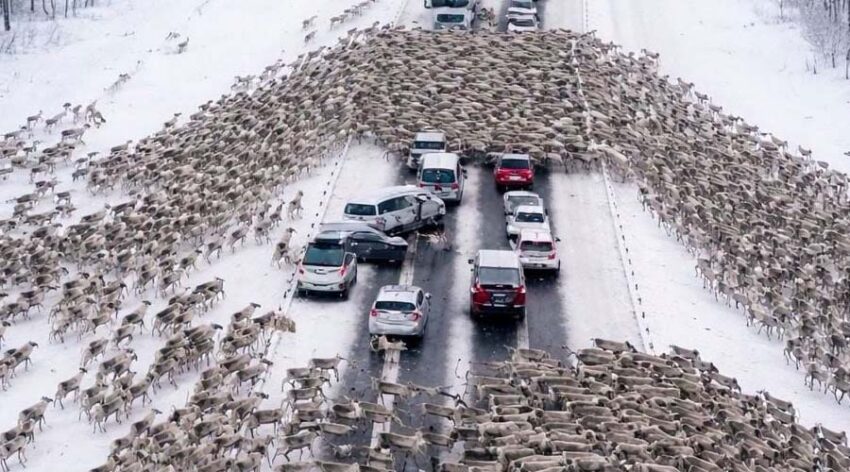
The highway froze in disbelief. Engines idled, people stepped out into the icy air, phones shaking in their hands as thousands of reindeer flooded the road like a living river. At first, it felt magical, like a scene torn from a winter fairy tale. But then someone looked past the treeline and saw what was com…
When the first distant roar rolled across the forest, no one understood what it meant. Only the animals did. Long before the avalanche became visible, the reindeer had already chosen their only path to survival—straight across the busy highway. What seemed at first like a festive spectacle was, in truth, a desperate flight from a collapsing mountainside and a deadly wall of snow devouring the forest behind them.
As drivers watched the white mass tear through the trees, the laughter and excited shouts faded into a heavy, reverent silence. People moved their cars aside, forming a corridor, letting the terrified herd pass. For hours, the road remained closed, but no one honked, no one cursed the delay. Instead, strangers spoke in hushed voices about how fragile everything is—plans, holidays, even life itself. The reindeer did not bring a miracle that day. They brought a warning, and a quiet, sobering reminder: sometimes salvation looks like chaos, and a traffic jam becomes a second chance—for them, and for us.
The linked text tells this as an undated dramatic story. It does not identify a highway, country, witness or official avalanche report. The image and narrative should therefore be read as an illustrative account, rather than a verified report of a particular traffic emergency.
Within that account, the change in the drivers’ understanding is the central moment. At first they see an unusual sight: a great number of animals crossing a road together. Because the setting is wintry, they connect it with Christmas imagery and react with excitement. Their interpretation changes when the danger behind the herd becomes apparent. The same movement that looked festive becomes a flight from danger.
The story is built around that contrast between what people can see immediately and what they have not yet noticed. The animals enter the road first; the explanation follows. That sequence leaves the drivers briefly trapped in an appealing but incomplete picture. Once they see the snow coming through the trees, the traffic jam takes on a different meaning.
Moving the cars aside creates a corridor rather than an attempt to force the herd off the road. In the writer’s account, the people respond by making space. The focus shifts away from their delayed journeys and toward the animals trying to pass them. No individual driver is named or assigned a heroic speech; the change is shown through the group’s behavior.
The final reflection describes the road closure as a pause in ordinary plans. That is the emotional purpose of the scene. A delay that would usually provoke impatience becomes something the drivers accept after understanding its cause. The source leaves the exact scale and outcome undocumented, but the lesson within the story is clear: a strange interruption can look very different once its hidden cause is understood.