
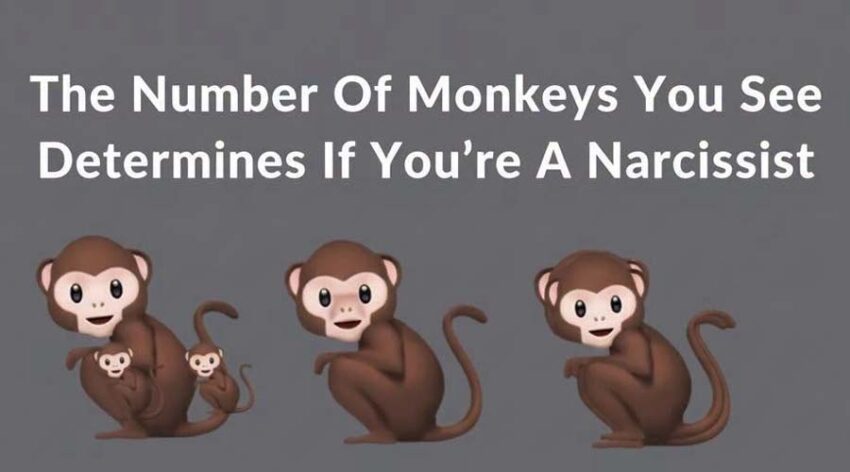
At first glance, it looks like a simple cartoon puzzle—rows of smiling monkeys against a plain background. Then your attention is drawn to the bold claim: “The number of monkeys you see determines if you’re a narcissist.” It’s the kind of statement designed to spark curiosity and make people stop and look closer. Naturally, you begin counting.
But the real focus isn’t the monkeys—it’s how your mind interprets what you see. Some people quickly settle on a clear number, trusting their first impression. Others keep looking and begin to notice hidden shapes, overlaps, and patterns that weren’t obvious at first. What seemed simple suddenly becomes more complex.
Images like this highlight a basic truth: people process visual information differently. The brain doesn’t just record images—it interprets them. It filters details, fills gaps, and decides what stands out based on focus, experience, and natural thinking patterns. That’s why two people can look at the same image and notice different things.
The idea that the result reveals narcissism, however, is not supported by science. It’s simply a catchy phrase designed to grab attention and encourage sharing. Still, the puzzle itself isn’t meaningless. It can offer insight into how you observe—whether you focus first on the bigger picture or notice finer details more quickly. Neither way is better; both are natural. In the end, the value of puzzles like this lies in reminding us to look again. Sometimes, a second glance reveals more than we expected—and that’s what makes them so engaging.
One way to enjoy the picture is to separate the counting task from the claim printed above it. First count the obvious monkeys, row by row, without trying to attach a meaning to the result. Then look again for smaller shapes or details inside the drawings. If your answer changes, that tells you something about this second look at the image, not a diagnosis of your character.
People can also disagree because they are counting different things. One viewer may count only complete cartoon figures, while another includes a partial face or a shape suggested by an overlap. Before comparing totals, it helps to explain what each person included. That simple conversation can reveal why two answers differ without deciding that one person is more caring, confident or self-centered than the other.
The image’s strongest claim concerns narcissism, which gives an ordinary puzzle an emotional hook. A person may feel pleased, defensive or curious before even finishing the count. Those reactions show how a label can affect the experience of a picture. They do not make the label scientifically meaningful. The number itself provides no basis for deciding whether someone has a personality disorder.
As a shared activity, the puzzle works best as an invitation to compare observations. Ask another viewer which details caught their attention first, or which hidden figure they noticed only later. The useful discovery is a new way to see the drawing. There is no need to turn a playful disagreement about cartoon monkeys into a judgment about someone’s personality.