
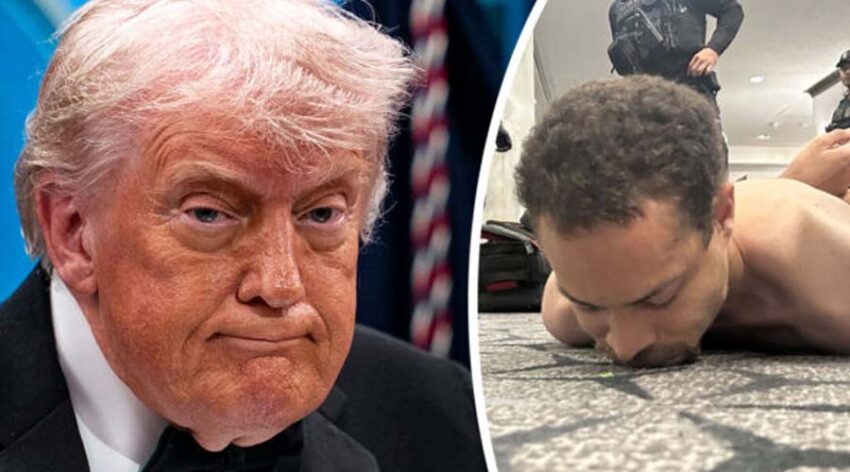
The shock surrounding the recent incident at the White House Correspondents’ Dinner has quickly expanded beyond the event itself, as online speculation begins to compete with verified information.
During the gathering at the Washington Hilton, a suspect—identified as Cole Tomas Allen—reportedly attempted to breach a security checkpoint while armed with multiple weapons, including a shotgun, handgun, and knives. Law enforcement intervened rapidly, and the situation was brought under control without fatalities. Officials later confirmed that Donald Trump and others under protection were safely escorted away.
In the immediate aftermath, authorities emphasized the seriousness of the threat. Acting Attorney General Todd Blanche stated that investigators believe the suspect intended to target government officials, citing materials described as a manifesto. He also characterized the response by security personnel as highly effective, noting how quickly the threat was neutralized.
The suspect, who had reportedly been staying at the venue, was taken into custody and hospitalized before facing expected federal charges. According to officials, his travel route and presence at the event are now part of an ongoing investigation.
However, as details emerged, a parallel conversation began unfolding online. Some social media users have suggested—without evidence—that the incident may have been staged. Much of this speculation centers on comments made earlier by Karoline Leavitt during a television appearance. Referring to the tone of the evening’s speeches, she remarked that “there will be some shots fired tonight in the room,” a phrase commonly used in political and comedic contexts to describe verbal jabs or criticism.
After the shooting, some individuals reinterpreted that remark literally, fueling conspiracy theories. Posts on platforms like X (formerly Twitter) have attempted to connect the comment to the later events, suggesting prior knowledge or coordination.
It’s important to approach such claims with caution. Phrases like “shots fired” are widely used as figurative language, especially in settings like the Correspondents’ Dinner, where sharp humor and political satire are expected. At this stage, there is no verified evidence from law enforcement or credible sources indicating that the incident was staged or orchestrated.
Meanwhile, legal proceedings are moving forward. U.S. attorney Jeanine Pirro confirmed that the suspect faces multiple serious charges, including using a firearm during a violent crime and assault on a federal officer. She also indicated that additional charges could follow as the investigation develops.
The broader situation highlights a familiar pattern: in moments of crisis, official facts and online speculation often spread simultaneously. While public reaction is natural—especially in events involving national leaders—distinguishing between verified information and interpretation remains essential.
What remains clear is that a potentially dangerous situation unfolded and was contained quickly. The rest—particularly claims circulating without evidence—should be evaluated carefully rather than accepted at face value.